Blog Post 1: What creates and diminishes poverty?
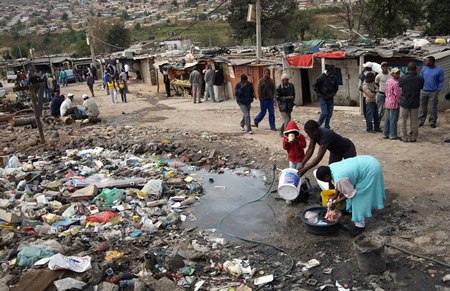
What if poverty was not purely about money? In both of Jane Novogratz’s TED talks, she takes time to discuss poverty in more than the economic terms that individuals might define it as. Novogratz mentions that although poverty can be defined as the 4 billion people on earth that are making less than $4 a day, she takes it to the next level by incorporating the different layers of this state of being. Ultimately, she defines poverty as a condition of lack of choice and freedom. She discusses how over her years of working with individuals in developing countries that poverty does not look a certain way. Factory workers, farmers, and drivers are among these people that pay 30 to 40 times more than what their middle-class counterparts do. Moreover, her main message is that these people, which come from different backgrounds, are willing to and in fact do prosper when the chance is given to them. Another Ted Talk on this issue is 3 Reasons Why We Can Win the Fight Against Poverty by Andrew Youn. Youn challenges the idea of poverty as one that is too big to solve and continues to deconstruct the stereotypical images of poverty. He does this by explaining that these individuals do not lack hospitality, rather their potential or opportunity due to lack of food, health, and other necessities to have the chance to thrive.
https://www.ted.com/talks/andrew_youn_3_reasons_why_we_can_win_the_fight_against_poverty/up-next#t-120897
I strongly agree with this message that poverty is due to lack of opportunity. I believe this, because in America there is endless realms of opportunity compared to Africa. Constantly we hear stories of individuals building successful business models. However, in Africa a citizen cannot just build a business model simply because they have so many challenges to distribute it. Furthermore, I have done service work and found that people living in poverty are driven. In most of my conversations, I have found that their history has not allowed them to have the opportunities that I or my peers have been exposed to.
How can the SDGs help nations throughout the world? According to Jeffrey D. Sachs in “The Age of Sustainable Development,” “The goal for SDGs is having extreme poverty eliminated, social trust encouraged through policies that strengthen community, and the environment is protected from human-induced degradation.” All of these components have different parts that construct them. For example, in order for social trust to be encouraged their needs to be good governance and hurting other species on the planet from human actions. In short, the vision of the SDGs is economic improvement for the 7.2 billion people on Earth by guiding the future source of economic and social development on this planet.
Neoliberalism threatens the goals of the SDGs. John McCarthur in “Own the Goals” discusses World Bank and IMF encouraging countries to cut government spending on public programs. This resulted in increase of poverty and death in Africa and other developing countries. This ultimately fueled the creation of the eight MDGs, which launched in March 2002.
McArthur also refers to players on the bench, as individuals who worked indirectly with the MDGs but refused to publicly support them. The players on the bench include President George W. Bush, State Department officials, and the United States as a country. With the United States as one of the most powerful countries, McCarthur criticizes that by not directly engaging with the MDGs when they first came out, it damaged not only the country’s image but could have fostered international goodwill. Even though a lot of the other countries in the world were engaging in the MDGs, one cannot help but wonder if even more countries would have taken part if the United States directly supported it since the beginning. Additionally, the United States missed a chance on having a foot in the door later on international topics. Now that the United States support the goals, what can the countries participating in implying the goals do directly to help out?
Now that the United States support the goals, what can the countries participating in implying the goals do directly to help out? More aid money is the UN Millenium Project and British Prime Minister Tony Blair’s recommendation along with reduced corruption and better governance, according to “How to Help Poor Countries” article. Aid programs have greatly improved the health of people with rather “simpler” illnesses such as diarrhea to offering contraception to women. The suggestions made by the authors are homegrown institutional competence like the Marshall Plan and the government effectively using the assistance given. I strongly agree that to give developing countries more aid money in exchange for better governance. This provides an incentive for the government to manage the country better. It holds them accountable, while still providing opportunities for the citizens to move forward. This opportunity gives them healthcare, clean water, housing, but most importantly a chance for us to live united.
Sources:
Sachs, Jeffrey D. “Introduction to Sustainable Development.”
McCarthur, John W. “Own the Goals.” Foreign Affairs. 2002-2006.
Birdsall, Nancy. Rodrik, Dani. Subramanian, Arvind. “How To Help Poor Countries.” 2005.
http://www.ted.com/playlists/67/the_quest_to_end_poverty.html
http://www.ted.com/talks/jacqueline_novogratz_invests_in_ending_poverty.html

 Case Studies in an Inter/Multicultural World