Blog Post 12: Muslim Youth and Multiculturalism
Over the course of the semester, we have learned how the Muslim population is increasing in Western Europe, and it shows no signs of stopping. In the text, Islam, Europe’s Second Religion Peter Mandaville address that as the second and third generation of Muslims become a part of the community, there will be a diverse range of responses in a sociocultural, economical, and political sense. This group of Europe’s youth has largely grown up in Europe and is comfortable at home. However, the author addresses the struggles that are unique to Muslim youth in Europe.
One of the struggles is the space for Islam to shift and change. This process involves bringing Islam into a great part of the culture that they are inhabiting, and there are a large number of people who wish and are preventing that from happening. This results in youths rejecting the Islam faith to avoid discrimination or bullying. No kid wants to be seen as an outsider, and the nationalist views that are partaking a large part of public discourse stimulate the culture as “the other”. This has led to and will continue to lead to bullying as the kids mature.
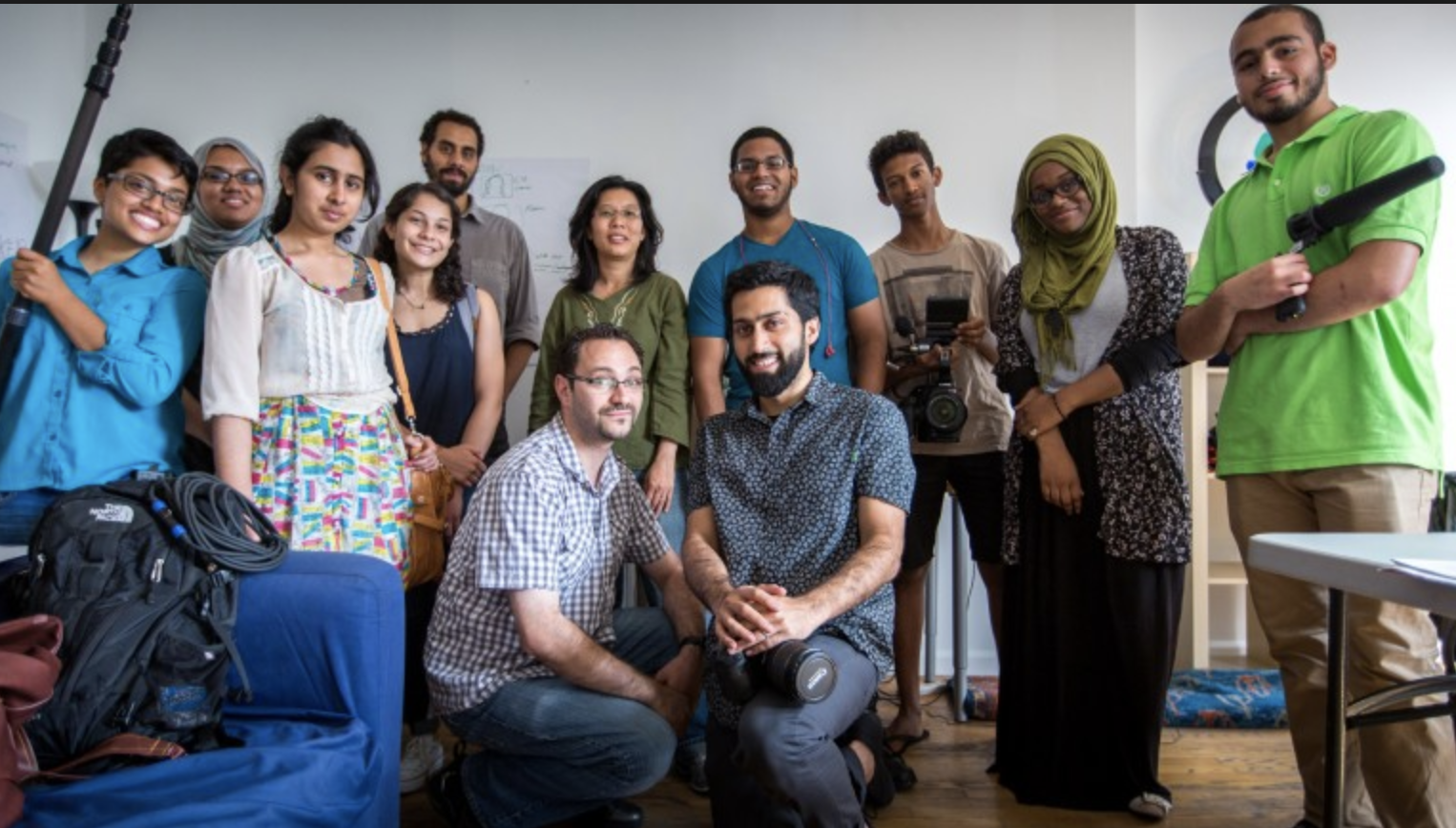
By judging a book by its cover or its religious identity, it diminishes the person as a whole. On the other hand, Muslim teenagers can turn to violence, because they wish to end this epidemic and do not know how to handle it. Another struggle is the language barrier. When Muslim youth speak English as their first language, they need to be exposed to Islam through the media and the culture they live in.
Shireen Hunter discusses the patterns of Muslim-European interaction, which allows the reader to understand the similarities and differences between assimilation, communitarianism, and new modes of integration. Assimilationists believe that Muslims should take their primary identity of their country they are a citizen in. They believe that religion is a private matter and should not be made public. Assimilation tendencies are more found in immigrants who arrived in the late 1980’s and 1990’s and the second and third generation Muslims, who have such a desire to fit in among their peers. Communitarians want Muslims to have cohesive communities so they can lean on one another in their society.
However, the most important movement among youth is integration without complete assimilation. The policies in numerous European countries is a combination of assimilation and communitarian tendencies. Hunter additionally addresses that in the future eventually it will be more integration without assimilation shaping the Muslim-European relations.
In Kenan Malik’s article, he discusses the diversity myth. The diversity myth is the belief that the multiculturalism has transformed societies and consequently made them more diverse than they have ever been. When in fact, historically there was diversity and the countries were not as homogenous as they seemed.
The text explains how both multiculturalism and assimilation are attempting to address the same problem, which is fracturing of society. Multiculturalism is defined as both a “society that is particularly diverse”, and “the policies necessary to manage a society.” This is promoting diversity, while assimilation calls an individual to desert their religious traditions and become one with the society they reside in. Malik points out that the debate should not be between multiculturalism and assimilation but between two forms of the former and two forms of the latter. He proposes that the ideal policy would connect with multiculturalism’s want for actual diversity and assimilation treating everyone as normal citizens.
In order to overcome multiculturalism Malik suggests that it is a necessity that Europe rediscovers a progressive sense of universal values. Moreover, immigration and integration should not be in the state’s hands but by the relationships that people form with one another and institutions established that are representative of who they are as a person, not just Muslim or German but both.
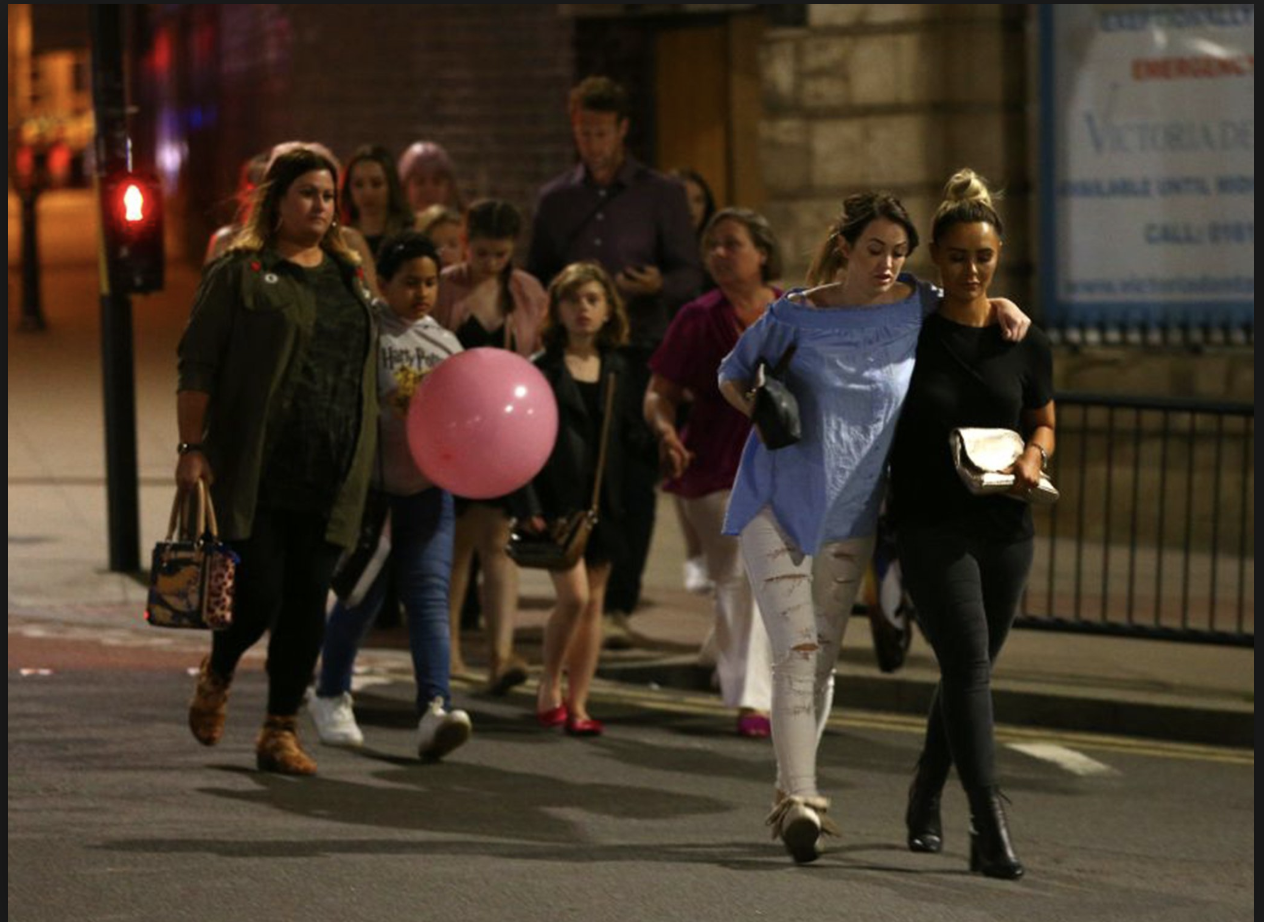
In Decoding Europe’s Homegrown Terror, Thomas Sajan explains how Muslim youths today are marginalized and widely associated with ISIS attacks. He explains how the young insiders are overall seen as a threat to the European continent. As we all know, the Manchester attacks affected many lives who were affected in the tragedy. It also greatly impacted how Europeans view refugees and unfortunately associate them with terrorist groups. The recurring suicide bombings are turning more and more Europeans to the thought that Muslims cannot be a part of their society. I agree with a lot of what Sajan is discussing, because of how Americans view Muslims after the 9/11 terrorist attacks. Muslims became largely discriminated and feared in our culture. Therefore, a similar attack in Europe would generate the same feelings. This does not mean it’s right, in fact I think it is extremely prejudice. Yet, it is a part of our culture and Europe’s, as well.
It is extremely disheartening that the events that have occurred around the globe are shaping not only the stereotypes that individuals view races or religions as, but how they are becoming instituted structurally. As we watched in class, country’s leaders are implementing laws that decrease diversity due to their fear of the religion or where they come from. It is automatically putting these individuals in a box, and that is the most limiting factor you can do to someone.
Additional Sources
Hunter, Shireen T. Islam, Europe’s Second Religion: the New Social, Cultural, and Political Landscape. Praeger, 2002.
_______________________________________________________________________________
Blog Post 11: The Story of Muslims and Westerners
Day in and day out we are exposed to the conflict between the Islamic world and the West. Whether it be through media stations or walking on campus, this political and cultural conflict has become a commonplace. This has become increasingly popular that when these cultures interact, it has become heavily based on images that are formed of Middle Eastern Muslims that the West has constructed and vice versa.
In Islam and the West: Narratives of Conflict and Conflict Transformation Nathan C. Funk and Abdul Aziz Said use a narrative analysis approach in order to discuss the story of intercultural confrontation and intercultural compatibility. The different stories of the cultures dramatically change from opposition towards one another to overarching themes when we step away from this conflict. Therefore, the authors refer to these overarching themes as constituting a single “story” of intercultural confrontation. The authors explain how the civilizations tend to cast one another in adversial roles. Westerners and Muslims have viewed the other civilization as unassimilable.
If we take a step back, think about viewing another civilization as “the other”. Personally, when I analyze it in this manner, it automatically makes the civilization foreign and not worth my time or consideration. By doing so, it unconsciously tells us that the civilization is inferior and all of the factors that construct it are unimportant. This is exactly what leads to the dehumanizing stereotypes and naive perceptions. Consequently, this guides our thinking to negative factors of a civilization overpowering the positive ones.
This is extremely present in the way Westerners view Muslims today. Often, the wide belief is that Islam is a violent religion, when the Qur’an teaches peace. We chose to ignore the facts and focus on the negativity due to the perception we have towards them as less than us. This entire situation worsened after the 9/11 terrorist attacks in which many Americans lost their lives. Ever since then, it created more division and animosity from the West towards Muslims.
On the other hand, the story of intercultural compatibility offers the view of Western and Middle Eastern Muslims consciously alike and can coexitst. The “second story” of intercultural compatibility is one that many academicians and diplomats value the difference between Western and Islamic civilizations. They also do not prompt Muslims and Westerners to unavoidable conflict. The similarity that both the West and Islam have is the common human heritage of “civilization”. Therefore, rather than demeaning one civilization as the “other”, one can take into consideration the many values they share as framework for understanding. The authors cite some of these values as respect for learning, desire for peace, esteem for toleration, and partisanship on behalf of human dignity.
The narrators of the story of intercultural compatibility place significant importance on that both Islam and the West have drawn heavily upon the Greek cultural heritage. Classic Islamic civilization was constructed from Arab, Biblicist, and Hellenic cultures. Additionally, it has incorporated Persian, Central Asian, and Indian workings within its cultural synthesis. This has created an even wider understanding and formed a link between the East and West, as Europeans were beneficiaries of what this had to offer. On the other hand, the Muslims benefited from trade with Europe.
Besides the shared appreciation for intellectual collaboration, the second story also advises against separating the communities in simple labels such as “Islamic” and “Westerners”. This groups both categories as homogenous rather than diverse. When in reality, both civilizations have a great amount of distinction in them. By labeling them as large, uniform groups, it ignores the conflicts or differing opinions between the groups that make up “the West’ or “Muslims”.

In David Frum’s article “How Much Immigration is Too Much?” he puts into perspective just how much immigration has increased and will continue to. He explains that by 2027, the foreign-born proportion of the United States population is estimated to match its all-time peak in 1890 of 14.8 percent.
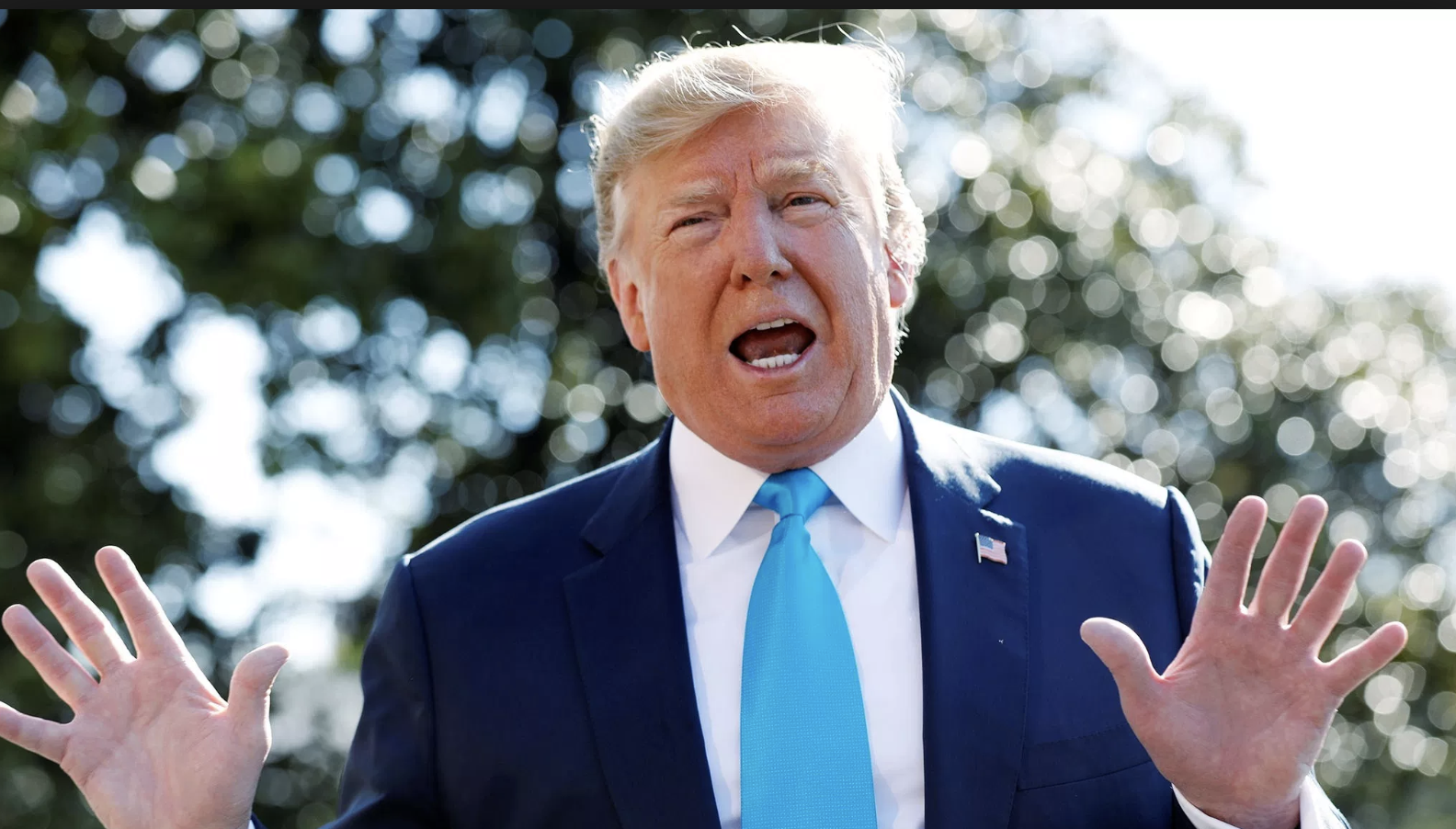
Frum illuminates the benefits that this massive new wave of immigration haws brought to the United States, but he also touches on the social and political costs of it. Both Hilary Clinton and Donald Trump have made comments about immigration hurting democracy. Donald Trump’s presidential campaign was heavily focused on anti-immigration. The extreme lengths that Trump is going to now has further increased the divide on the issue.
The very high levels of immigration have corresponded with widening class divisions, questioning of political and economic elites, and the rise of extremist politics. Overall, Frum makes the point that immigrants are often fleeing for better lives for a multitude of reasons. Therefore, how will the United States balance it and what kind of policies will it enforce? It is not a black or white question but one that has a significant amount of grey areas.
I strongly agree with Frum’s argument that there needs to be a balance. The United States is arguably one of the most powerful countries and has a significant amount of resources available to help immigrants, but it does not have unlimited assets. If policies are put in place that are either completely anti-immigration or open-borders, it will greatly hurt not only our country but individuals’ lives. We need to create a realistic balance or “right level of immigration” in order for democracy to continue to thrive and help out immigrants who are in need of a new home.
Additional Sources
Funk, Nathan. Said, Abdul. Islam and the West: Narratives of Conflict and Conflict Transformation.International Journal of Peace Studies, Volume 9, Number 1, Spring/Summer 2004.
Frum, David. How Much Immigration is Too Much? The Atlantic. April 2019. https://www.theatlantic.com/magazine/archive/2019/04/david-frum-how-much-immigration-is-too-much/583252/
____________________________________________________________________________
Blog Post 10: The History of the Islamic Religion
It is no secret that Muslim societies are at the center of pressing issues around the world, especially in Western cultures. In The No-Nonsense Guide to Islam, Ziauddin Sardar and Merryl Wyn Davies explain the history that even when most Muslim countries gained their independence in 1950, the decades that were supposed to be filled with innovation were rather occupied with patterns of European colonial dominance. The political leaders emerged from Westernized elites, who still to this day suppress almost all forms of the religious traditions of Islam. Obviously, this sparked tension between the rulers and the citizens.
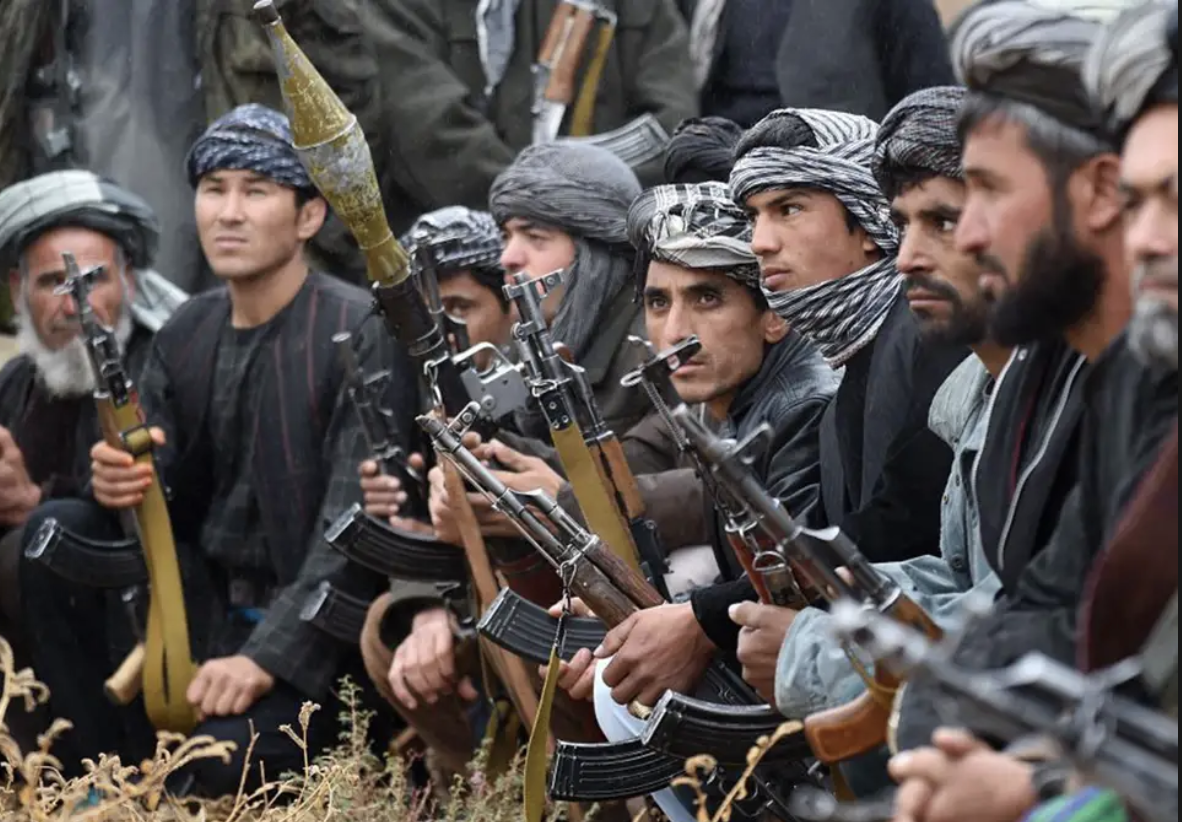
The “jihadi” movement in Afghanistan brought the Soviet Union down. Keep in mind that this was one of the largest and strongest countries at the time. This gave more militant elements in the reform movements and what power tasted like for the first time. This led to the Islamic Revolution in 1979. The authors emphasize that this a power in which the society had never had before, and it led to such a craving for it. Ultimately, it piloted the creation of the Taliban, in order to apply the ideal Islamic state. As we are aware, the Taliban is an enemy of the United States due to their open fighting and attacks on individuals and communities. However, the authors shed light that the modern and moderate elements in Muslim society experience just as much conflict with the Taliban as we do.
As I briefly mentioned before, the fundamentalist goal is to apply what they believe is the ideal Islamic state, and that is implementing sharia or Islamic law. Sardar and Davies explain how the rubric of the sharia is nearly opposite of the Qur’an. We have discussed how the Qur’an is the religious text that is widely used in practicing Islam today. It has little rules in it and focuses on the religion that is constructed of God and the virtues. However, the sharia rubric is mostly fiqh. Fiqh is classical jurisprudence that was created in the Abbasid time period, which incorporates the logic of Muslim imperialism from the 8th and 9th century. Therefore, rather than a guide to help one practice the religion, like the Qur’an is, the sharia leads to religious rebellion.
Another important factor of the sharia that I would like to mention is the one the puritan fundamentalist focus greatly on: the hudud laws. This is the part of the sharia that spotlights crime and punishment. Although these laws are only applicable in a perfect and just society, the fundamentalists use them as a justification for their violent actions. The idea that sharia is a “law” is even ironic in itself. When a law is implemented it is to protect by taking the moral evolution of humanity into full consideration.
I strongly disagree that Islamic law has always been consumed with “punishment.” Technically, someone could argue that it is when taken literally. I would like you to think of this from a different perspective. In the Bible, God deems that it is okay to sacrifice animals and occasionally people for him. If we recall, God told Abraham to sacrifice his only son Isaac. Although God commands him to stop at the last second, he was suggesting violence and punishment. Even in the 10 commandments, God says if you disobey those then you have sinned and will be punished. That is the entire reason that people go to confession, is to be free from their sins.
Now, a Christian could argue that the story was not to be taken literally, but when a Muslim does it then it becomes problematic. The Bible and the sharia were written hundreds of years ago, and I believe do not hold literal meaning. Although there is a section of the sharia that focuses on crime and punishment, we can see striking similarities present in the Christian text, as well. By giving this example, it takes away the focus of this question being one of the Islamic religion but one of any religious text, even one that is extremely popular in the West.
Musawah is a global movement that is focused on equality and justice in Muslim communities. It has a vision of a world where the basis of all human relations is filled with equality, non-discrimination, justice and dignity. Although this seems nearly impossible, the organization believes that it is extremely achievable, as it works for progress in human rights for Muslim women. The organization as an extremely fitting name as musawah translates to ‘equality’ in Arabic.
Some of their key messages to accomplish their goals is sharing knowledge, connecting people and engaging internationally. They explain that with a holistic approach, it builds and shares knowledge that supports equality in the Muslim family. Secondly, they believe that by connecting people there is an abundant amount of support. Finally, they support human right mechanisms to achieve equality and justice in the family.
I think this organization is a great tool for Muslim woman, as it openly opposes the sharia laws. Despite the fact that we discussed how they are not as widely used as the Qur’an and often radicalized; they still have presence today. By providing a resource to women, just as any other religion it can only benefit them rather than hurt.
Additional Sources
Sardar, Ziauddin. Davies, Merryl. The No-Nonsense Guide to Islam. Chapter 8: Contemporary Issues. Text.
___________________________________________________________________________
Blog Post 9: The Realities of Immigrants
- How do Zemni and Parker (ch.13) explain the “failure of integration” of Muslims in Europe? Why is the way Europeans think about integration and multiculturalism problematic in the discourse surrounding Islam and Muslims in Europe? Explain and give examples.
In the text Islam, Europe’s Second Religion, Zemni and Parker discuss the how the EU’s integration and expansion has dedicated a significant amount of effort to create the collective European identity and culture. This set of values is based off of the European national cultures, which include democracy, tolerance, acceptance for human rights, and more. This means that in order for someone to be European, it is necessary that they practice that set of values. Ultimately this translates to “multicultural Europe” being extremely exclusive with the ideological framework it is based on, and has become extremely problematic for anyone who does not fit in that bubble.
With this being said, Zemni and Parker explain the “failure of integration” of Muslims in Europe as yet another arena in which the biased concept of multiculturalism in Europe has created failure of migrants/immigrants of non-European origin to be able to assimilate into host societies, specifically Muslims. This has been present in two impartial demographic movements. First, the migration of laborers and their families from third-world countries to satisfy low paying jobs in Europe’s economy between 1950-1970. This ended in the 1970’s because of economic declines that led most European states to halt immigration. Secondly, the trend of individuals and their families fleeing conflict, political, and financial insecurity after the end of the Cold War. Most of these people fled to Western Europe.
Both of these movements sparked the challenge posed by the seeming incapability of immigrant groups (again mostly Muslims) to “get ahead” in European context. Ultimately, this failure of integration is defined as the failure to adopt the styles and practices that individuals are expected to accept and embrace themselves, despite it simply being the norm of hegemonic cultures.
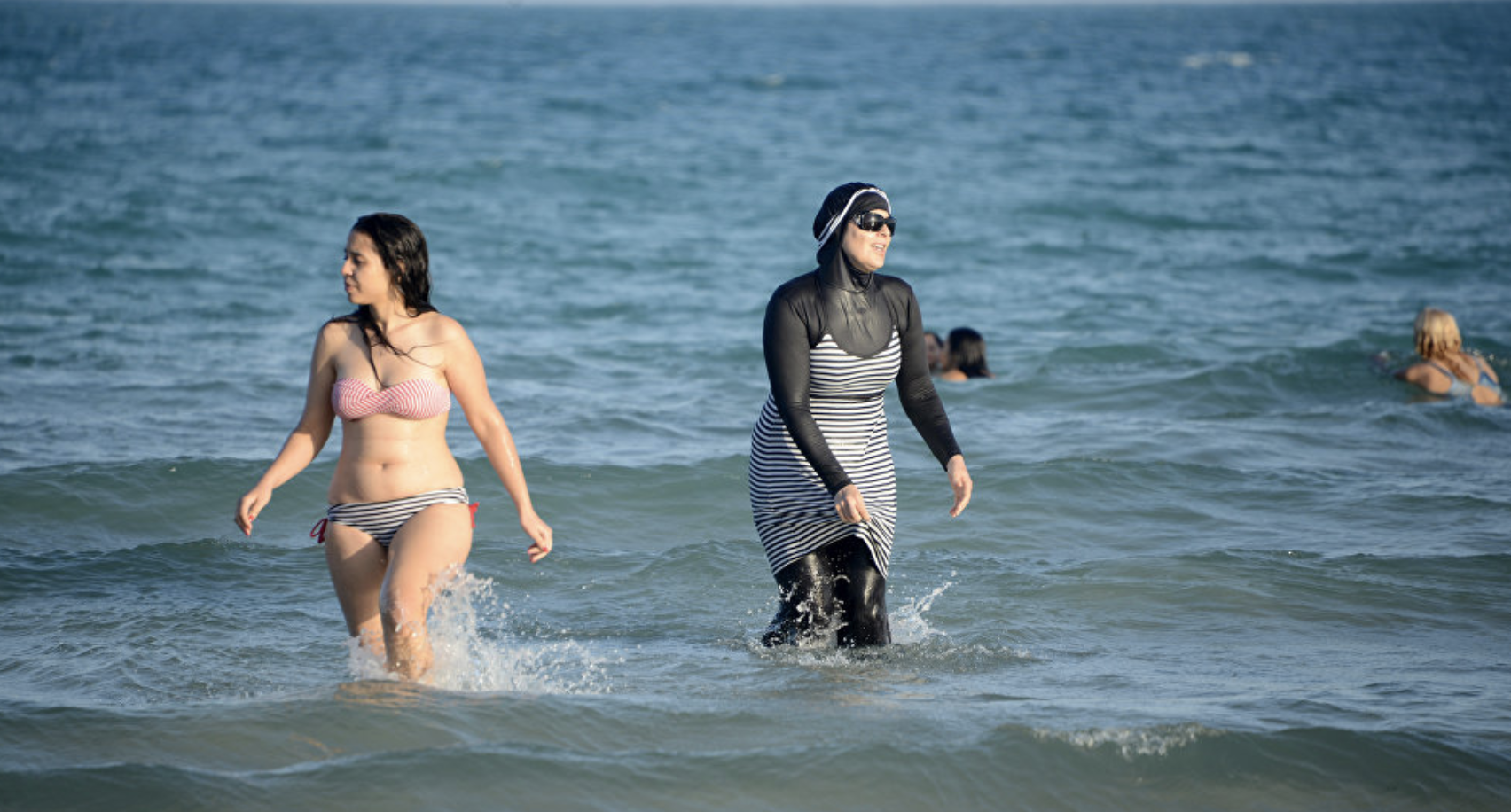
This relates closely to not just European Muslims, but Muslims that live in the United States experiencing the same expectations. As we discussed last week, if this marginalized group does not fit into the ideals that are societal norms, they are viewed as not belonging. This is prevalent in women wearing a veil, as they are assumed to be terrorist or forced to wear it by men, when in fact it is simply an image of their religion. All of these stereotypes that are prevalent in the United States and EU are from narrow-minded, nationalistic understandings. Merriam-Webster defines the term multicultural as “relating to, reflecting, or adapted to diverse culture. Therefore, by definition the multicultural integration in the West completely loses its meaning.
2. What is your assessment of the Foreign Policy The Dispossessed article and the film My Escape? Does the comic do justice to the refugee situation? Is it a good analysis of the crisis? Does Islam play a role? Even if you only watched a part of the film My Escape what is your assessment of the film? What caught your attention?
The Dispossessed article portrayed a realistic picture for me of the various reasons that refugees and migrants are leaving their homes. Whether it be due to political wars, geographical changes, or poor economies, it shows the actuality of people’s lives that is in the middle of the political climate today. We hear about immigrants 24/7 through the media, but Alia Malek and Josh Neufeld depict the stories of real people behind the topics that are so closely debated today. It allows a personal and intimate understanding of what refugees are truly going through and informs people of the consequences of the harsh immigration laws they are debating, attempting to, and have implemented. I believe the comic accurately shows the privilege that citizens in the Western countries have as it therefore leads to ignorance towards refugees.
The film My Escape had multiple scenes where it showed refugees terrified as they fled their home countries. Although they did not know what difficulties may lie before them, they wanted to survive. The hardships in the stories that were shared, further confirmed how much privilege I had as a natural born citizen of the United States. Although I am extremely passionate and strongly support immigration, I was unaware of the realities that these people faced to simply stay alive. Bottom line is in both the article and My Escape, refugees are fleeing for a better life and are in immediate danger.
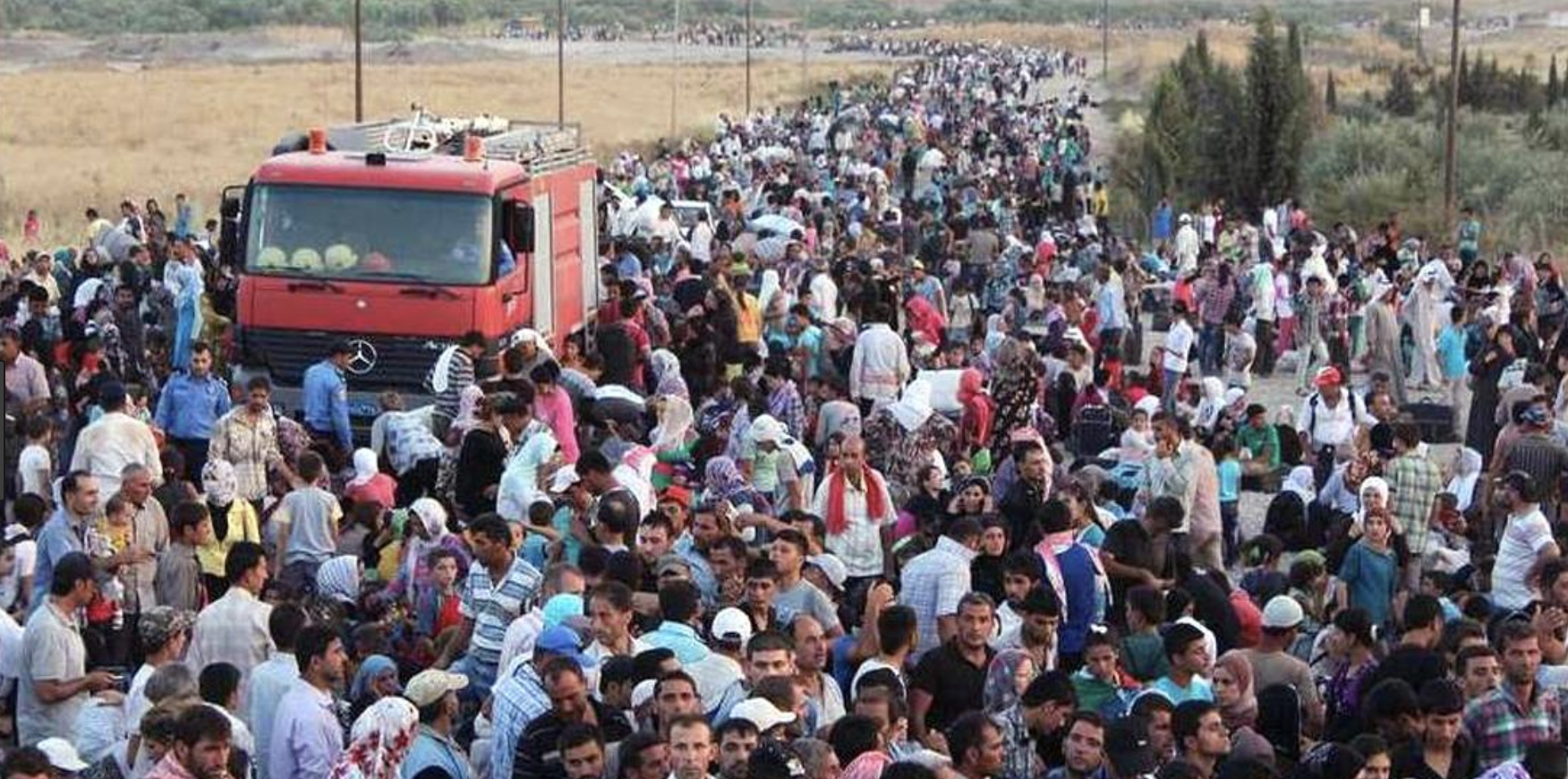
I believe this is especially important today, as the current president has shutdown the government in order to have enough funding to build a wall between the United States and Mexico. Consequently, President Trump has hopes that this physical wall will keep immigrants out. After viewing the documents and video, it displays the insensitivity that the country is having towards those who need our help the most. I genuinely feel that if the president and other government officials would truly empathize with these people, they would have a completely different viewpoint.
Additional Sources
Alia Malek & Josh Neufeld “The Dispossessed” (Foreign Affairs)
Hunter, Shireen. Chapter 13. Sami Zemni, and Christopher Parker. Islam, the European Union, and the Challenge of Multiculturalism.
Sasse, Elke. My Escape. Film.
—————————————————————————————————–
Blog Post 8: The Challenges that Muslims Face in France
The Muslim presence in France was not always a hot-topic issue. According to the Pew Research Center, Muslims today only make up around 5 percent of the population in Europe. However, in countries like France, Germany and Sweden the Muslim population is rapidly growing and appears as if it is nowhere near stopping. The center reported that in 2016 there was around 5.7 million Muslims in France, which makes up 8.8 percent of the country’s population. From 2010 through 2016 Muslims in Europe increased from 3.8 to 39 percent. Although this may sound minuscule, that is increasing the population from 19.5 to 25.8 million individuals.
The LA Times article explains how many of these Muslims trace their roots back to Algeria and Tunisia, both countries are former French colonies. Many of the individuals today had grandparents migrating to help rebuild France after World War II. Then Algeria spend years fighting for its independence from the French. Although this was many years ago, these events impact Muslims today in France. The article explains how European Muslims are condensed in suburbs known as banlieues, that are usually little more than a cement jungle of decrepit high-rises. Although they reside in France, this shows the disparities that European citizens may experience based on the religion, especially one like Islam that has such a rich history.
In recent elections, Muslim immigration has been top issues and that is largely due to these increasing numbers of those in the population. Although a lot of this increase has been due to immigration in Europe, the increase of the Islam community in the future is attributed to the noticeably difference in age of Muslims than other Europeans. Pew Research Center explains that 50 percent of all European Muslims are under the age of 30, which is prime childbearing age. Moreover, the Muslim woman residing in Europe is expected to have 1 more child than a woman who does not identify as a Muslim. These intersecting factors suggest the inevitability for the expansion of this community in Europe, particularly in France.
Laïcité is a term that is very puzzling for those who do not reside in France to fully understand. In this New Republic article, it defines laïcité as France’s principle of secularism in public affairs, aimed at fostering a post-religious society. It originated during the French Revolution when France was seeking separation from the church and state. Ultimately this unique term refers to the freedom of citizens and of public institutions from the influence of organized religion. When laïcité originated it was aimed at separation from the Catholic Church, the Islam religion now conflicting with this concept in France. In 2004 France passed a law that banned religious symbols and clothing in public schools, this further marginalized Muslims as they opted for Muslim schools. This further separated them from the community.
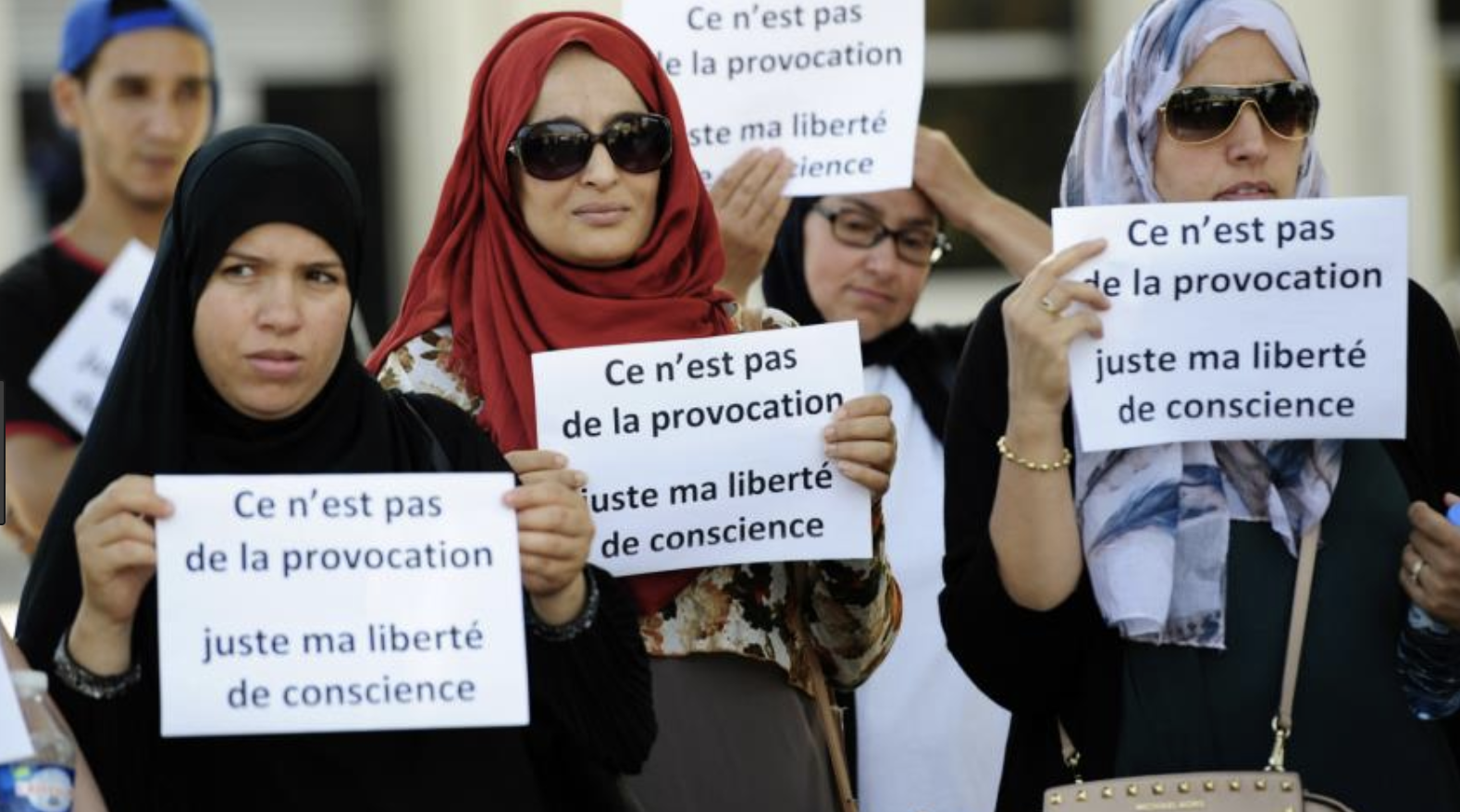
Like I mentioned before, Muslim immigration is a controversial issue, and the presence of Muslims in France has become a political ideology. This Prospect Magazine article suggests that laïcité is a cornerstone of republican values. Similarly, it also reports that the far right is the key factor to upholding these laws that many feels is discriminatory and old-fashioned. With the increase of Muslims presence in the country, it will only create more disparity and separation among the citizens residing there.
No matter where it is in the world, there has been a long history of controversy over women wearing hijabs, especially in Western culture. There are many stereotypes that I have heard throughout the years that are filled with false information. Some of these include men forcing women wear these scarves and it makes a women look less American. These accusations could be further from the truth. Muslim women choose to wear a veil or headscarf as a symbol of their religion. This Institute of Islamic Information and Education article even poses the idea that wearing a headscarf may be the “truest test” of one’s religion. As we discussed last week the Islam religion is based on a text, The Qur’an. This is similar to the Bible in the Christian religion that offers guidance and rules. One of the principles is for women to have modest coverings. That is where this headscarf originates from that is a distinctive part of the Islam religion.
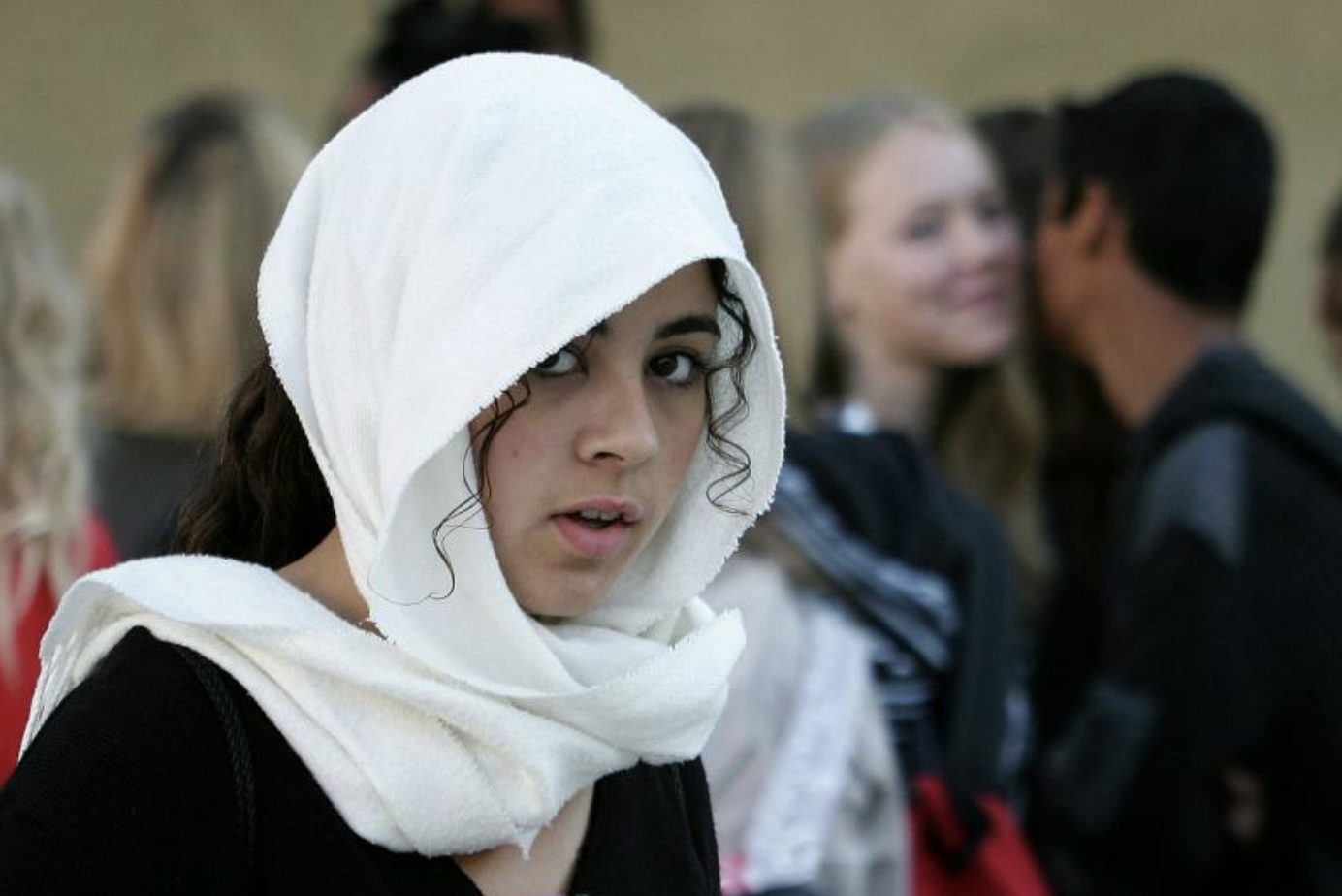
Although a hijab is an individual’s choice like wearing a cross, it is seen as a threat to Western culture. United Nations University explains that this is largely due to the tendency to pair terrorist attacks with Islam. These attacks that are often labeled as acts originating from the Islam religion include the Iran Hostage Crisis in 1979 and the 9/11 attacks in 2001. Obviously when a woman is wearing a hijab, it brings back to life a long-standing superficial security threat to Western soil among America. Additionally, it collides with societal norms in Western culture. These women do not look the same as many others, which causes citizens to question how can they be European or American? This is largely due to the media perpetuating Muslims as having one and only one identity, rather than including their nationality too. This ignorance not only discriminates individuals but has real-life consequences that have and can result in violence.
————————————————————————————————–
Blog Post 7: The Challenges that Muslims Face in Europe
What are some of the myths about Muslims in Europe that Justin Vaisse discusses?
The first myth Vaisse sheds light on is the belief that being Muslim constitutes a fixed identity, and it is one that is strong enough to fully characterize a person. He illustrates that this is present by discussing newspaper article from the Washington Post that uses the term “Muslim” to describe individuals migrating West. These writers of the article neglect the individuals’ gender, race, social class and other principles that make up their being. Vaisse also cites the widely used phrase in the media during the riots in France as “Muslim riots in France” when in fact they had nothing to do with the Islam religion. This is expanding the false stereotypes of the religion that are embedded in society.
The second myth is that Muslims in Europe are inherently foreign, in one way or another. This is the equivalent of visiting Middle easterners who are alien to the “native” culture. Despite the popular opinion, European culture has included Muslim elements from as early as the 8th century. Furthermore, there is between 15 and 17 million Muslims in EU-27 countries. This is not a small amount and many individuals are born in Europe rather than abroad. Europe is their home, just like I call the United States home, despite the history of my religion.
The third myth is that Muslims in Europe form a “distinct, cohesive and bitter group.” Vaisse explains how Muslims are the extreme opposite of what the 2005 Foreign Affairs article labels them as. He explains how Muslims in Europe and a national level are anything but a cohesive group. This is because of the divisions between countries, social statuses, ethnicity, and political views. To label them as one community without variety is extremely misleading to people.
The fourth and final myth Vaisse addresses is that Muslims are demographically gaining on the “native” population. What lies behind this myth is the assumption that Muslims form a distinct demographic bloc defined by religion and that is incapable of being a part of society. When in reality, there is significant amounts of intermarriage and conversions. Muslims are mostly lay-abiding citizens and are extremely patriotic to where they live. Since EU immigration is extremely regulated, Muslims will never make up more than 6 percent of the population in the approaching decades.
Why is it important to make a distinction between the religious and political dimensions of Islam?
It is extremely important to make a distinction between religious and political in everyday life, and it is even more important to define these terms when discussing the dimensions of Islam. Because this religion has misconceptions, by defining these differences it allows us to understand the religion more thoroughly. In Shireen Hunter’s book, Islam, Europe’s Second Religion, she discusses that the political and religious dimensions of Islam that are based on two very different approaches.
Muslims worship directly from The Quran. Although individuals are unified through this central text, the politics can and will differ among the members. This greatly depends on the society that they are engulfed in and the sociocultural norms and expectations. When practicing politics, Muslims turn to the Quran to find out what is against their principles, similar to individuals turning to the Bible. It is not the absolute decision making piece for them, it is rather a guidance. Therefore, “Islam” does not have a certain appearance. Just like many other religions, there is diversity within the individuals even though they are connected through the teachings.
What kind of challenges do education and social rifts in Europe bring to Muslim communities of Europe? What does Ramadan suggest Muslims should do in face of such challenges? Ch 11
Hunter addresses the challenges that education and social rifts that members of the Muslim community in Europe face. Since education is evolving, expectations of both teachers, parents, and students are changing. With social media and other factors, students socialize while learning information academically. Their education causes them to socialize. Although children are learning in the classroom, they are not learning how to adapt to diversity that is present in many cultures. This limit in their education has serious consequences. Since students are never taught the truth about racism, it can further perpetuate it. The author discusses that violence and insecurity are increasing in Europe. A lot of this violence is directed at Muslim immigrants, which brings to light xenophobia. Xenophobia is a term that Merriam-Webster defines as a “fear and hatred of strangers or foreigners.”
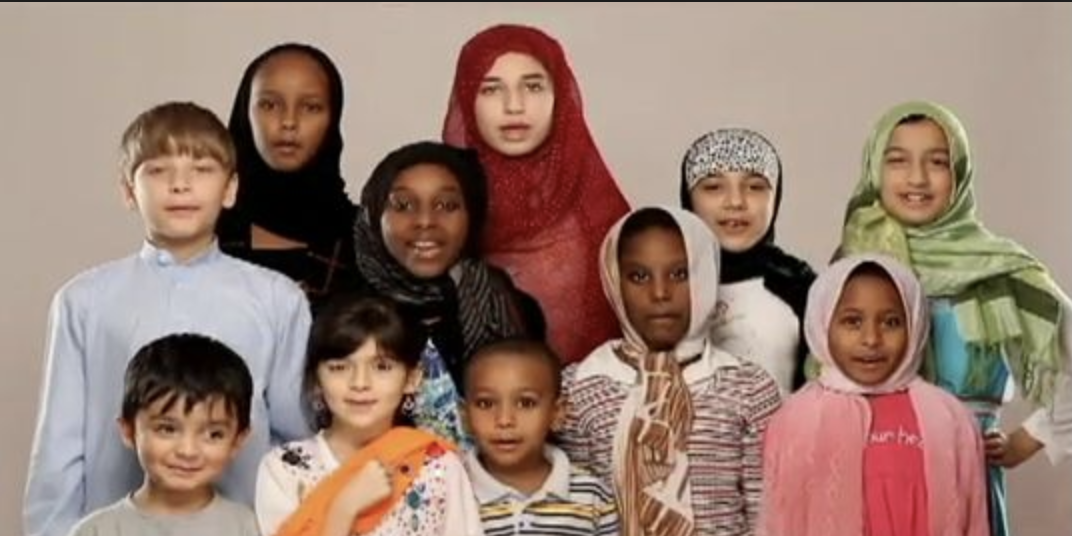
Hunter addresses the challenges that education and social rifts that members of the Muslim community in Europe face. Since education is evolving, expectations of both teachers, parents, and students are changing. With social media and other factors, students socialize while learning information academically. Their education causes them to socialize. Although children are learning in the classroom, they are not learning how to adapt to diversity that is present in many cultures. This limit in their education has serious consequences. Since students are never taught the truth about racism, it can further perpetuate it. The author discusses that violence and insecurity are increasing in Europe. A lot of this violence is directed at Muslim immigrants, which brings to light xenophobia. Xenophobia is a term that Merriam-Webster defines as a “fear and hatred of strangers or foreigners.”
By learning what is taught in basic subjects, it is limiting kids at the very least to form their own opinions and keep their mind open to other ideas. If children in Europe would be exposed to a more well-rounded approach to learning, it would create the future generation to be more prepared for the evolving world we live in and decrease the level of hatred for others who are different than yourself
In Chapter 11, Tariq Ramadan suggests that Europeans fight these injustices that are due to racism, stick with their religion teachings, and attempt to create dialogue among one another. These injustices he mentions includes fighting discrimination in employment and intervening against violence in the community. One of the challenges that Muslims will face is co-existing when they are receiving immense amounts of hate and violence directed towards them. By practicing the values of this peaceful religion, it will help individuals get through rough times. Finally, by creating a conversation about the reality of this religion, it will destroy the myths that are perpetuated in the media and throughout cultures.
Additional Sources
Hunter, Shireen T. Islam, Europe’s Second Religion: the New Social, Cultural, and Political Landscape. Praeger, 2002.
Vaisse, Justin. “Muslims in Europe: A Short Introduction,” Islam in Europe.
_______________________________________________________________________________
Blog Post 6: For or Against Development Aid?
Since the beginning of the semester, we have talked about poverty and the different layers that construct this issue. This includes the varying arguments on the best way to reduce and ultimately end poverty and what poverty actually looks like in third world countries. I have examined and analyzed what has led to extreme poverty in my assigned country, Angola. From this, I have developed certain viewpoints on what can lead and possibly reduce this epidemic. In Chapter 10 of Poor Economics, Banerjee and Duflo display both the positives and negatives of development aid with economists who have studied poverty on an intimate and prestigious level: Jeffrey Sachs and William Easterly. Jeffrey Sachs supports development aid and William Easterly is against the idea of it. Both sides have valid arguments, which helped me construct my opinion further on this complex issue.
Although I have been reading about extreme poverty for the past few weeks, I will never be able to fully understand it. This is because I am a middle-class white female from St. Louis, Missouri. No matter how much material I read or discuss I will never be able to fully understand what these economists or the authors talk about and have seen. I have not witnessed it firsthand, let alone lived it or anything relatively close to it.
Jeffrey Sachs believes development aid is a key tool for economic progress in underdeveloped countries. He argues that this tool does not stand alone and works wonders when it is combined with good governance, transparency, and effective policies administered in these countries. He uses public health for having the greatest success when aid is given to them, specifically with Malaria. As I have discussed before, malaria is disease that is present in many African countries and leads to deaths of tons of citizens. With development aid, it has been able to be under control more than before. He argues that this would simply not be attainable without development aid given. Sachs recognized that there are poorly designed programs that give financial assistance, but it can be fixed by implementing programs with clear goals and sound operating principles.
William Easterly’s major concerns with providing aid is feedback and accountability. He discusses how both these elements are imperative for development aid to work. Furthermore, if they are not there this idea will fail and is proven because it has failed in the past. By agencies not being held accountable for these factors and focusing on broad goals such as reducing disease, he discusses how it progress will not be able to be made with development aid. Moreover, impoverished countries have had a history of corrupt governments controlling where foreign aid is distributed. Easterly argues that this money often has political motives behind it and there are more innovative ways to solve big issues such as health care and education.
From hearing both sides of the issues, I agree with Jeffrey Sachs for a variety of reasons. Development aid gives these countries a starting point to move forward that would otherwise simply be unattainable. Without it, where do countries realistically begin to make process to achieve goals? I do recognize potential and realistic issues with development aid, but I think that is miniscule compared to the benefits that it has. If people are under such corrupt governments, they will not have the freedom to make effective reforms on their own. It further calls for the need of development aid, in my opinion. In the Brookings article, it discusses how even though there still is many corrupt governments, the past two decades has seen the most dramatic decline in global poverty. I am not dismissing the fact that there are programs that may not hold individuals to the utmost responsibility. However, I think with programs that are thoroughly constructed, aid has been life-changing. Look at Sachs use of it saving lives with helping diminish malaria, although it is not perfect it is progress that helps lessen poverty.
Banerjee and Duflo sufficiently address the first two sustainable development goals: end poverty in all forms everywhere and end hunger, achieve food security and improved nutrition. As I mentioned before we have read about the factors that are apart of extreme poverty. The authors discuss how there is a need for proper policies and governance to capitalize on the country’s resources and proper distribution of them. Also, they assert the need for basic healthcare in order for these communities to thrive. This includes the need for clean water and protection from diseases like malaria. Furthermore, they discuss how small loans known as micro-credits have given individuals an opportunity to start their business that would otherwise be nonexistent. In Angola, it has allowed farmers and fishermen to expand their business. They are able to export their products, consequently leading to structural economic expansion. On an individual level, this income has led to more mouths being fed. Although there is strides being made with innovations in underdeveloped countries, there is still struggles that individuals face by not receiving adequate healthcare. This is largely due to the economic struggle of simply not being able to pay for a vaccine. However, by reducing poverty and hunger with better leaders in the government and micro-credits, it provides a backbone for these goals to continue to be closer to being met in the future.
Additional Sources
“Chapter 8, 9, 10” Poor Economics: Rethinking Poverty and the Ways to End It, by Abhijit V. Banerjee and Esther Duflo, Random House India, 2013, pp. 183-234.
___________________________________________________________________________
Blog Post 5: Micro-credits, Angola and Digital Technology
In Poor Economics, Banerjee and Duflo, make several arguments both for and against micro-credits. Micro-credits are defined as financial services that are targeted for low-income people. They provide these people credit, savings, insurance, and money transfers.
Banerjee and Duflo support using micro-credits and the positive results when they are used correctly. These are virtually extremely small loans, and the authors argue that they give the people who receive them the framework for managing financials. This includes basic habits, such as spending and saving money correctly. By having people understand these fundamental skills to successfully manage their financials over time, it could potentially lead to a debt-free future on a micro level. Moreover, Banerjee and Duflo also seem to understand the idea for human need. Since these individuals are extremely poor, even small loans could improve the quality of life greatly for them.
However, Banerjee and Duflo recognize that no matter how beneficial they may be individually, they will certainly not eradicate poverty. The authors state that these micro-credits are certainly not the solution to large poverty issues. Consequently, they make several arguments against using micro-credits. Although these loans have the potential to be positive tools to manage money properly, there is going to be people who receive the money and spend it immediately, Since these poor people have never had money, they could be and probably will be impatient. This point could be an negative consequence of using micro-credits. Furthermore, poor people may not see the point of saving and would rather use these loans for everyday needs. This completely eliminates the possibility of micro-credits creating a positive future and ultimately difference on the macro level. Since these loans are small, they very well might not be nearly enough for an individual to start a small business. Without having enough right away, it poses the question of how likely do you think poor people will be inclined to save more and if so, how will they raise the rest of the funds?
Although it is a complex issue, Angola does use micro-credits. Since most of the economy relies natural resources (petroleum and diamond) to create profit, initially you would think citizens the ideal contenders for micro-credits. This is because micro-credits are heavily aimed at allowing small business owners to create a business and if there is not a lot of business opportunities other than oil and diamonds, what is the point? However, I have discussed in previous blog posts how a majority of the population lives in areas where they depend heavily on agriculture and fishing. In the Southern African Development Community documents, the authors discuss how the banks have provided micro-credits to those in the agriculture and fishing sectors. Although these areas are not the main source of income for the country, by providing micro-credits to smaller sectors of the market it allows for expansion. I agree with the limits on who they are providing them to, because if it is not regulated about who it is being given to, individuals could take advantage of the loans and put themselves in a worse economic state.

These micro-credits have not only given farmers and fishermen tools to improve their business, they have allowed them the opportunity to export these products. This was simply not feasible before these loans were available. Since Angola deeply relies on exports for their income, it will be interesting to see what area of the market the economy is more profitable in the next few years.
However, the Brookings Article largely critiques Angola, as it labels it a severely off-track country. Geoffrey Gertz and Homi Kharas discuss that the SOTC are defined by the country’s ability to ensure that its population can escape extreme poverty over the medium term. I agree with the authors that maybe not within the next term Angola will be able to do this, but I believe with the progress it has made since escaping the Civil War, there is a lot more to improvements that we will see in the economy.
Digital technology is making a difference in poor countries, but it is limited. According to Technology In Organization, digital technology includes all types of electronic equipment and applications that use the information in the form of numeric code . Therefore, digital technology includes the creation and use of computerized devices. Some Africans now have access to these devices such as phones, which results in them being connected to the rest of the world through social media. The Guardian article, discusses African citizens who use digital technology, and one of the most important points is that social media allows them to expand their businesses. However, I think the distribution of technology in Africa is the problematic part. If everyone or a majority of individuals in your area do not have it, then what is the point of it?
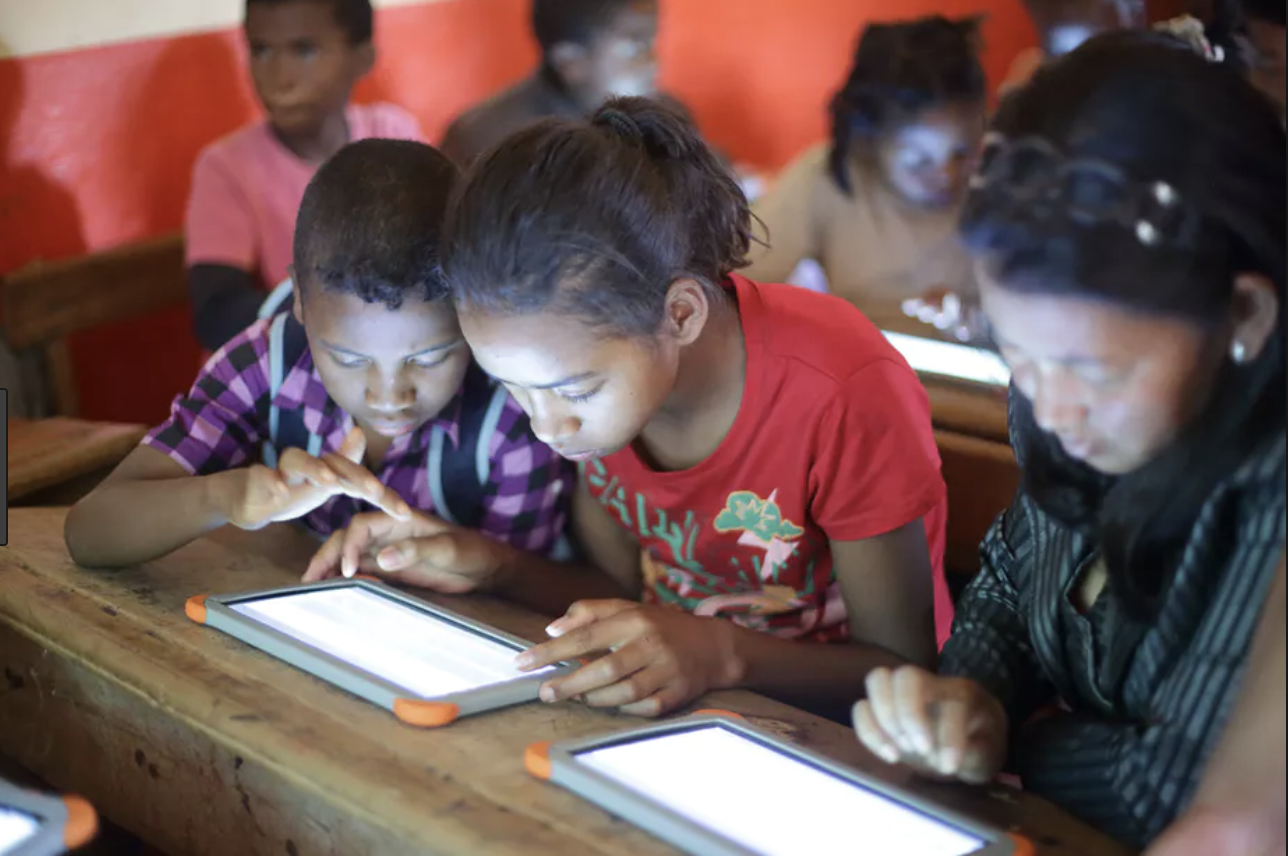
I agree with Nick Dearden’s article that we hear the stereotypes and reinforce assumptions that Africa is poor, but we are the ones limiting them by the western governments forcing African government to open up their markets to unfair competition. However, I do think the corruption in leadership in African countries has also limited Africa, and that is not necessarily anyone’s fault. Africa has several natural resources that can be exported, and if we help Africa export them efficiently, it could be extremely beneficial to the state of their economy.
Additional Sources
“Chapter 8 and 9” Poor Economics: Rethinking Poverty and the Ways to End It, by Abhijit V. Banerjee and Esther Duflo, Random House India, 2013, pp. 183-234.
______________________________________________________________________________
Blog Post 4: Analyzing Angola, Democracy, and Health Care Investments
Can you imagine becoming the leader of a country and still not having enough control to start taking steps to make a change? In the Council on Foreign Relations article, it discusses how Angola’s newest leader, President João Lourenço, did not assume control of the ruling party, MPLA (Popular Movement for the Liberation of Angola) until a year after he was elected. But he is already emerging as a “cheetah” due to his plans to implement systems of accountability and reduce poverty. We read last week about how Radelet explains that ‘cheetahs’ are trying to redefine Africa. Ever since running for office, President João Lourenço has led an anti-corruption campaign, aimed for economic reforms in the oil industry, and expected to further utilize other natural resources that have been ignored for years.
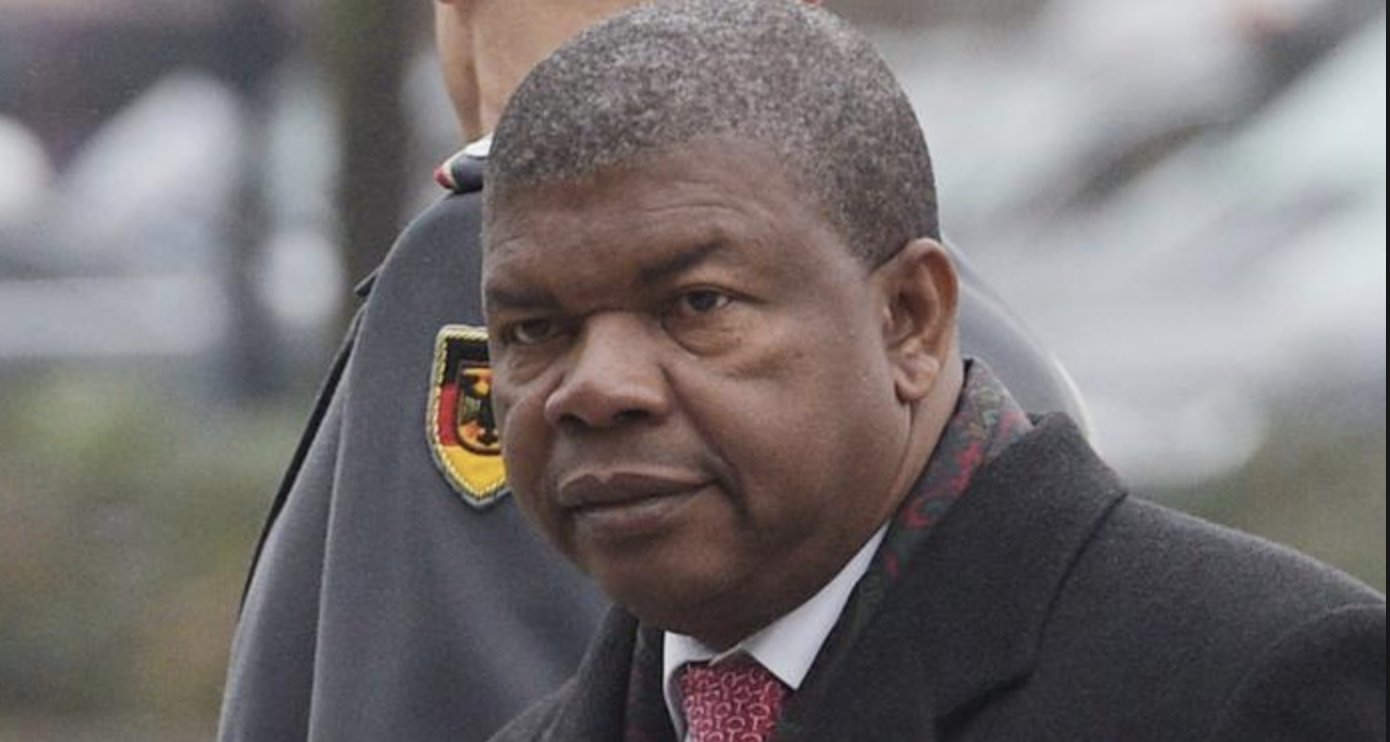
The All Africa article explains how Lourenço has taken more steps to see change. He has effectively removed traces of the previous president, José Eduardo dos Santos, in his cabinet. This includes his children from their positions at the sovereign-wealth fund and Sonangol. Furthermore, it discusses how he has continued to administer accountability, since he has made arrests to high-ranking officials that were connected to dos Santos and heavily involved in his corrupt administration that lasted 38 years. The former president’s son, José Filomen dos Santos, was included among the series of arrests made since 2017.
The Africa Report explains how President Lourenço is focused on improving the economy and consequently reducing poverty. He is making strides to do this by meeting with the International Monetary Fund (IMF) that predicts Angola’s GDP growing 2.2 percent this year and even more the following year. With the help of IMF, Lourenço is hoping to increase transparency in the government with the reformed agenda. Finally, the cheetah is looking to relaunch fishing and agriculture markets and by using those resources to open the country to foreign investment. The previous administration was strongly against this idea and only wanted private investors. However, Lourenço believes this will help distribute income to those who have been deprived due to the events in the past like the Civil War. Although this is progress for the country, Angola still has a significantly long way to go.
In Emerging Africa – How 17 Countries Are Leading the Way, Radelet explains how both strong political and economic controls allowed leaders to be in control for long periods of time, even decades. This is precisely what happened with Angola and President dos Santos. The Encyclopedia Britannica article discusses that after Angola gained its independence from Portugal, dos Santos held power from 1979 to 2017. As a result, there was little opportunity for change, let alone spreading democracy. Democracy is defined by “protecting fundamental political freedoms and civil liberties, or in establishing key institutions such as free and fair elections, representative government, and check on constitutional power”, according to Radelet. This chapter argues that the variety of elements that make up this definition are all imperative to construct a democracy. By having these factors, it allows individuals to easily analyze and compare the levels of democracy in the different countries in Africa.
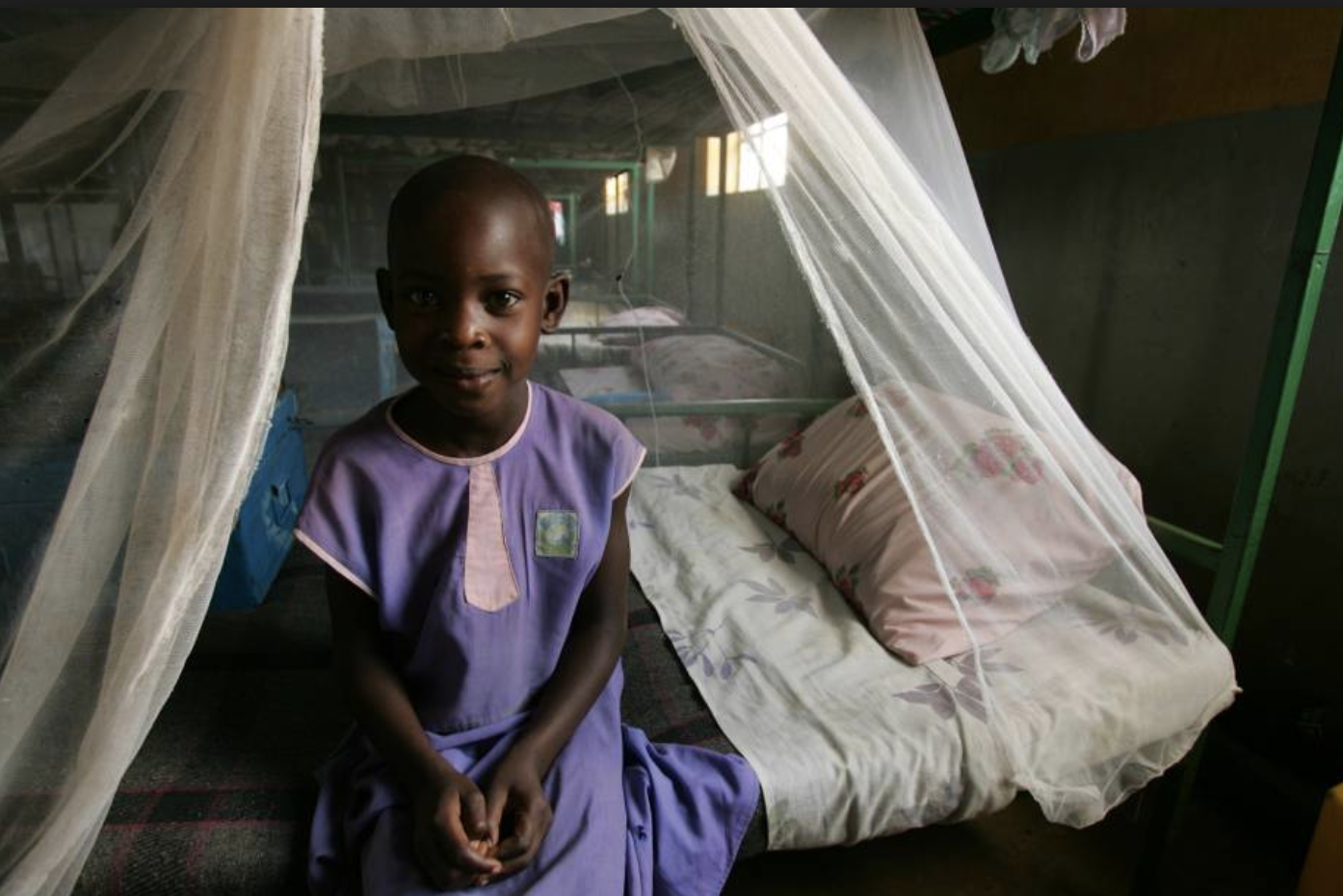
In Chapter 3 of Poor Economics, the authors discuss a variety of effective health investments. The idea behind these investments is to improve health and as a result people’s lives. The authors discuss cheap and easy preventative healthcare measures. They refer to them as low hanging fruit. They include bed nets in countries where a large fraction of the population is exposed to Malaria. This includes countries like Zambia, where over 50 percent of the population is exposed to this disease. However, there are critics that are skeptical of the idea that these infested countries have such high poverty rates due to Malaria. The chapter touches on Sachs idea that maybe they have not been successful in eradicating Malaria due to poor governing rather than innovation.
However, numerous studies have been performed analyzing successful campaigns to eradicate Malaria. Researchers did find that life outcomes of children born after the campaign catch up with children born where there are low incidences of Malaria. This suggest that there is a reduction in long-term poverty due to bed nets.
Another example of an effective health investment that the authors discuss is clean water and sanitation. In 2008, UNICEF and WHO estimated that 13 percent of the world’s population lacked access to improved water sources and one fourth of that did not have any water at all that was safe to drink. By having the opportunity to have piped water and basic sanitation needs that we take for granted such as a toilet, it allows both children and adults to lead healthier and more productive lives. Although this is a more expensive option, it is an option that was not available before.
Obviously, increasing healthcare is the backbone of these investments, and the authors suggest cheaper ways to avert health issues. To get rid of diarrhea, they recommend adding chlorine to water. Other suggestions include deworming drugs, immunization, exclusive-breastfeeding for six months, and more. By just having the existence of these technologies it can save lives that used to be taken from these everyday. Hopefully by addressing these social issues, it can ultimately implement a cultural change.
More Sources
“Chapter 3, 4, and 6” Poor Economics: Rethinking Poverty and the Ways to End It, by Abhijit V. Banerjee and Esther Duflo, Random House India, 2013, pp. 1–40.
Radelet, Steven. Emerging Africa- How 17 Countries are Leading the Way. Foreword. Chapter 3.
________________________________________________________________________
Blog Post 3: What has changed in Africa?
What is the easiest way to communicate with someone who does not live close? What probably came to your mind was to pick up your phone and make a call. But, what if that was not an option? Up until recently, that was a reality in Africa. In Emerging Africa: How 17 Countries Are Leading the Way, Steven Radelet discusses how the lack of means to communicate hindered Africa’s progress. However, the recent technological advancements have been a game changer. It is amazing how these innovations fuel entrepreneurship and subsequently financial security for families.
The meaning of “Cheetah” that Radelet refers to Africa’s next generation of leaders that are “quietly and quickly to move into Africa’s government bureaucracies, civil society organizations, and business” and will be guiding the future of the countries that are a part of the continent. This group does not appear a certain way, as the individuals are not defined by gender, education, or location. They can be labeled as individuals who want to see change and they are calling for transparency, good governance, respect for human rights, and accountability.
The “Big Man” or “hippo generation” is a term that refers to the old, slow moving generation that complains about colonialism and imperialism. Radelet explains that these undesirable characteristics were extremely prominent in the first group of postcolonial presidents and prime ministers that rose to power from leadership positions and were only capable of fighting the colonial government rather than legislating. Ultimately, they were incapable of making a change in democracy.
Radelet’s positive view in Chapter 6 on the African information and communications (ICT) explosion is not completely valid and sustainable. This is because he contributes ICT as being a miracle in disseminating information on diseases that have been notorious in Africa, such as HIV/AIDS. Does the African ICT effectively reach and educate people? Probably more than before, but he noticeably dismisses that HIV/AIDS has been around for decades. Therefore, individuals living in areas heavily impacted for such a long period of time probably have some knowledge of the diseases. Even getting reminders about appointments is helpful, but I do not think the African ICT is the difference between life and death that Radelet’s context suggest that it is.
Similarly, in the way that Radelet discusses the medical advances offered by African ICT, I do not believe that the African ICT is the key piece of strengthening democracy. Earlier in class, we read about how the rising democracy is the framework of Africa’s advancements. But, attributing African ICT as such a prominent factor to the assembly of their government is simply unrealistic. SMS text messages are incapable of changing the structure of a government, especially if might not always have reliable information. Overall, I have no doubt that the African ICT explosion has helped the population with progressing, but it is certainly not the end all, be all for the obstacles the countries have overcome.
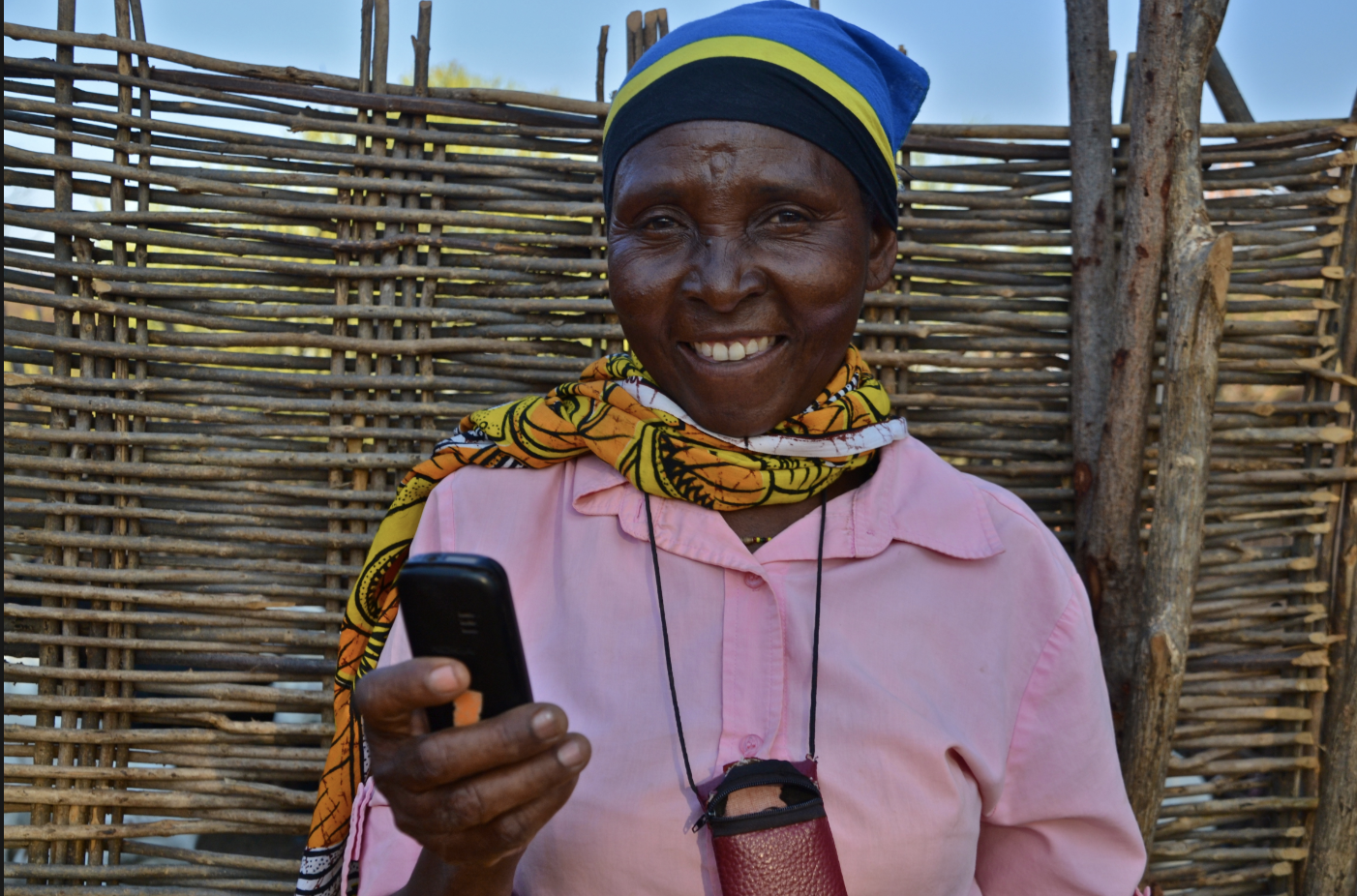
Banarjee and Duflo’s chapter in Poor Economics explains that it is extremely possible to get trapped in poverty. The book refers to “poverty traps” or countries that face extreme poverty due to their environment that often has undesirable conditions and diseases. Furthermore, the text explains how they struggle geographically, as they are often landlocked.
My assigned country, Angola, is bordering the South Atlantic Ocean and sits between Namibia and Democratic Republic of Congo. It is a coastline country, and it has two seasons: a rainfall and drought season, according to The World Factbook. The heavy rainfall has cause periodic flooding on the plateau. Almost half of the land is forest and cannot be used for agricultural. Furthermore, the country had been involved in a Civil War from 1975-2002 that has significantly slowed down its potential for progress.
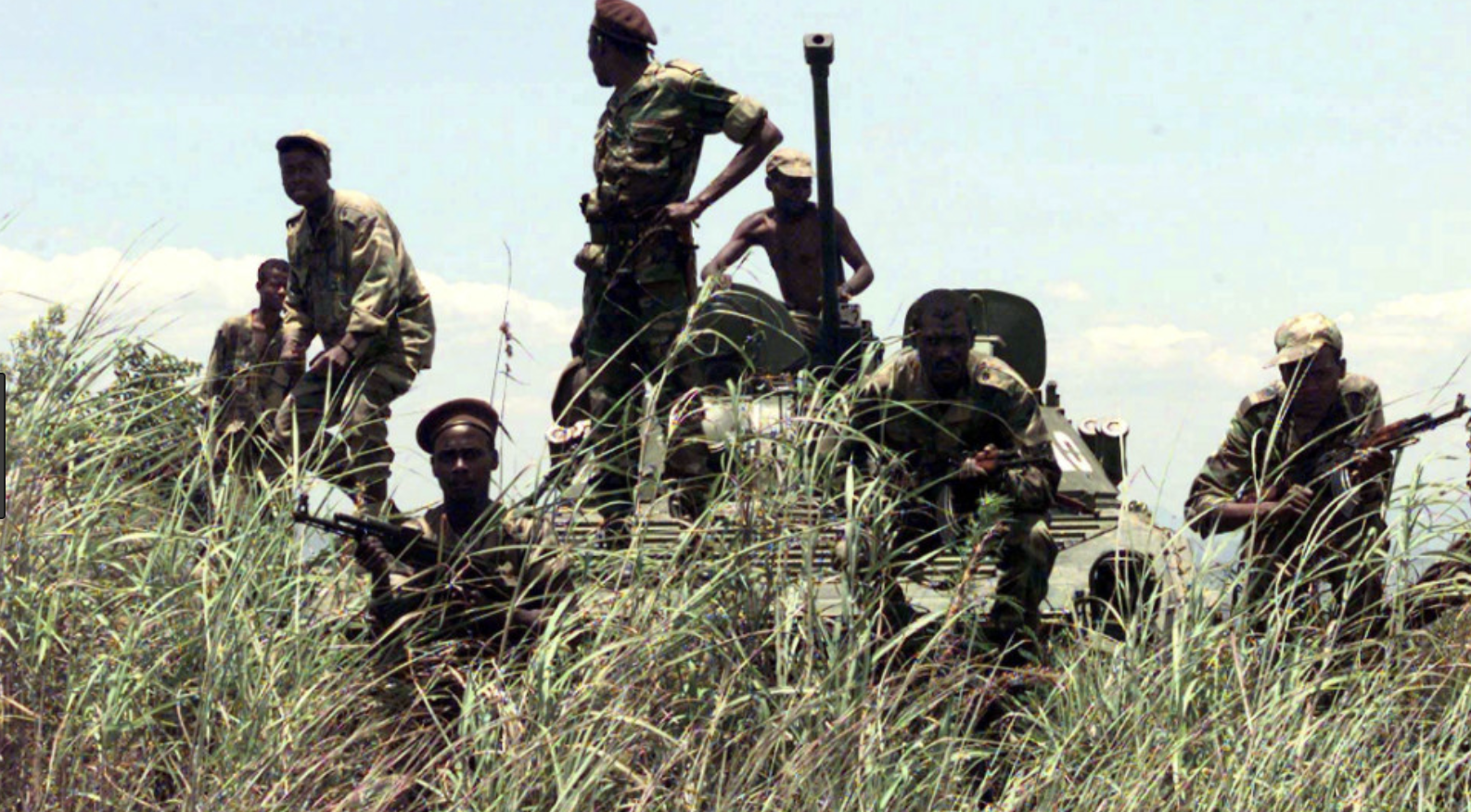
Since the Civil War the country has utilized its oil production for economic growth and lowered child mortality. According to Trading Economics, the country is the seventh highest GDP at PPP among African countries. Moreover, according to UNICEF reported in their recent data collection that the child mortality rate is now at a low of 8.1 percent.
Although the country is making progress since the Civil War, SDG #1 is the least achieved of the goals for Angola. It is ranked 147 out of 186 on the poverty scale, despite the petroleum resources. The poverty is primarily in rural areas. The United Nations Development Program reported that 59 percent of the working population lives in poverty and the adult mortality rate hovers at a whopping 24 percent.
All Africa explains that human capital is a problem in Angola, but the country is aware of the problem and working to fix it. In the article, it discusses how the country has invested significant amounts in an effort to increase human capital. This is expected to increase productivity in companies and allow for innovation. By doing so, it will allow the economy to further expand and hopefully contribute to better economic distribution.
Although Angola obviously has plenty to work on with the SDGs, it has overcome hurdles since gaining its independence from Portugal in 1975. Additionally, it can now can effectively use its resources to attain their goals. The World Folio explains that at the time of it struggling for its independence, 85 percent of the population was illiterate and the economic sector was nonexistent. This perspective displays the headway Angola has made, but again, the country needs to see more progression in the near future.
Additional Sources
“Chapter 1 and 2.” Poor Economics: Rethinking Poverty and the Ways to End It, by Abhijit V. Banerjee and Esther Duflo, Random House India, 2013, pp. 1–40.
Radelet, Steven. Emerging Africa- How 17 Countries are Leading the Way. Foreword. Chapter 6. Chapter 7.
____________________________________________________________________________
Blog Post 2: There is good news in Africa?
When is the last time you heard about good news in Africa? Many Africans have the perspective that good news in Africa is often vacant from headlines. There is a substantially large imbalance, as good news is often presented as an “afterthought” according to Radelet’s article. The factors that are classified as good news display the economic growth rates of 2% per capita since 1996, deepening democracy away from dictatorships, trade and developing doubling, stronger leadership, and decreasing poverty in seventeen African countries. These countries are calling for the dismissal of conflict, stagnation, and dictatorships that are apart of their history. Some of the countries that Radelet mentions as recent successes include the economic growth of Ghana causing the income of an average citizen by more than 40 percent, Mozambique’s GDP growing 7.5 percent for the past 15 years, and Cape Verde increasing the average income by 66 percent since 1993. These increasing economic numbers are merely the beginning of good news in the countries. Mali’s poverty has fallen by about one third and infant mortality rates have dropped in a majority of the emerging countries that are breaking away from history. Blatantly opposing the typical pessimistic headlines that cover newspapers, these dynamic countries are creating more accountable and democratic governments, better incomes, new investment opportunities, decreasing poverty, and improving healthcare. These countries did not easily change their course of history. They did so by opposing the government in political protests that forced government officials to guarantee civil liberties. These hardships led to the election of Nelson Mandela as president in 1994, sparking the spread of democracy. From there Africa has seen numerous leaders surfacing, and they are helping expose the country to ideas on an international platform.
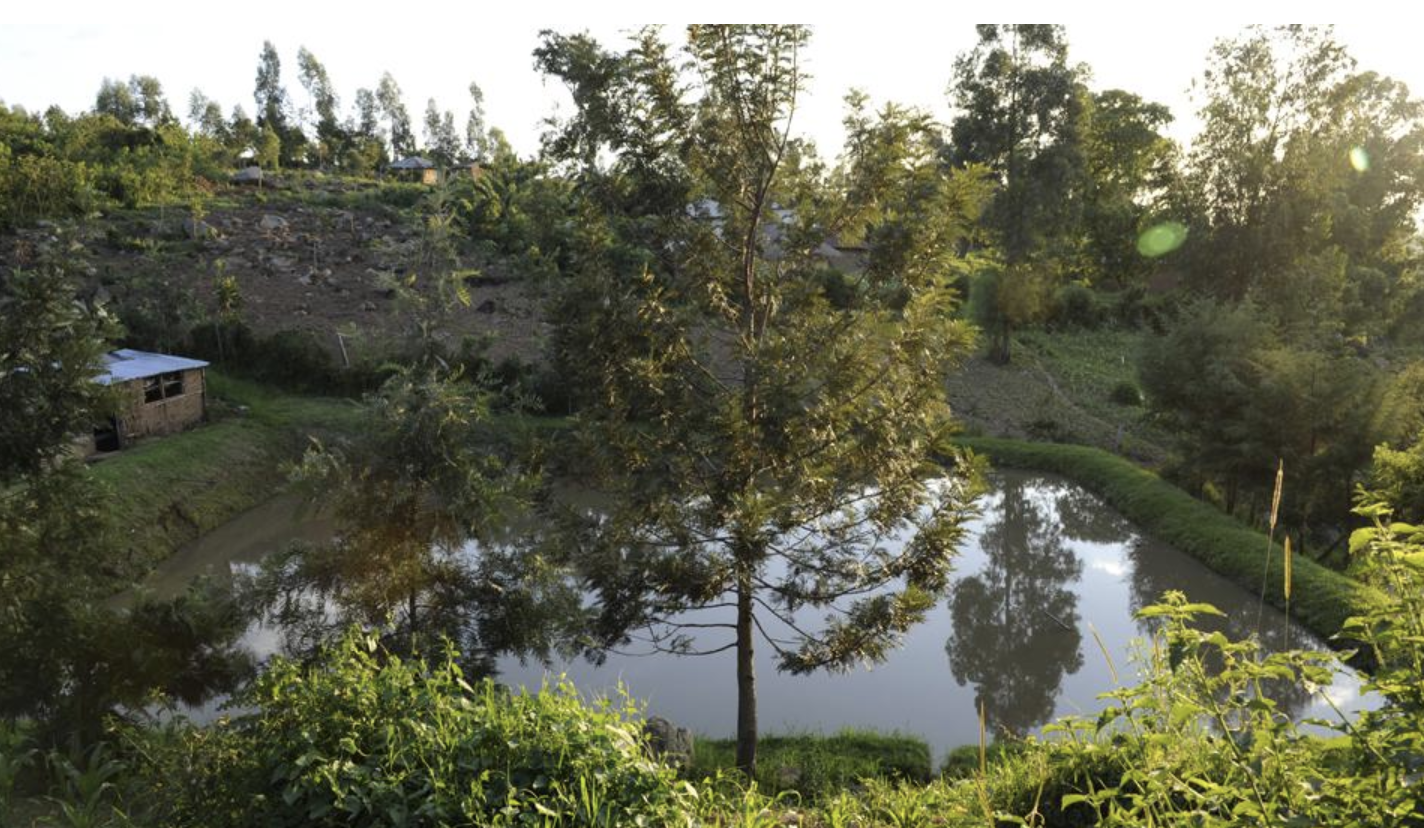
The Millennium Villages Project or MVP is a leading international nonprofit organization that is committed to eradicating poverty, hunger, and preventable disease by achieving the Millennium Development Goals. In Sachs article, he explains that most urgent task of these goals is eradicating poverty. This is due to fact that poverty is the matter between life and death for 1 billion people. Ross Levine and William Easterly explain that Africa has been implementing policies for political and financial stability, and that neighboring countries acting together has resulted in great success over the past 30 years. The Millennium Villages Project is searching for more success in Africa by offering an “innovative integrated approach to rural development” in villages.
Sauri, Kenya is the first and largest site of MVP. The organization chose this village due to the land farming being extremely insufficient to support a family and the prevalence of Malaria year-round. The goal for the village was to increase the income of 80 percent of the population from $1/day and decrease malnutrition, especially in children. Since MVP has started operating in Sauri, over 21,000 children in school are provided a daily meal and the average maize field has increased from 1.9 to 5.0 tons per hectare increasing income. Further successes include income diversification, nearly all pregnant women being tested for HIV, and household’s access to water supplies doubling. In an Alicia P.Q. Wittmeyer’s article, she explains how the critics have commented that MVP is in fact conquering too much and needs to take small steps in order to see continued success. However, MVP has publicly opposed this concept and stated that there is no room for baby steps when dealing with such crises. Kenya’s GDP is $79.2 billion, GNP is $161.5 billion, and it’s HDI is .590.
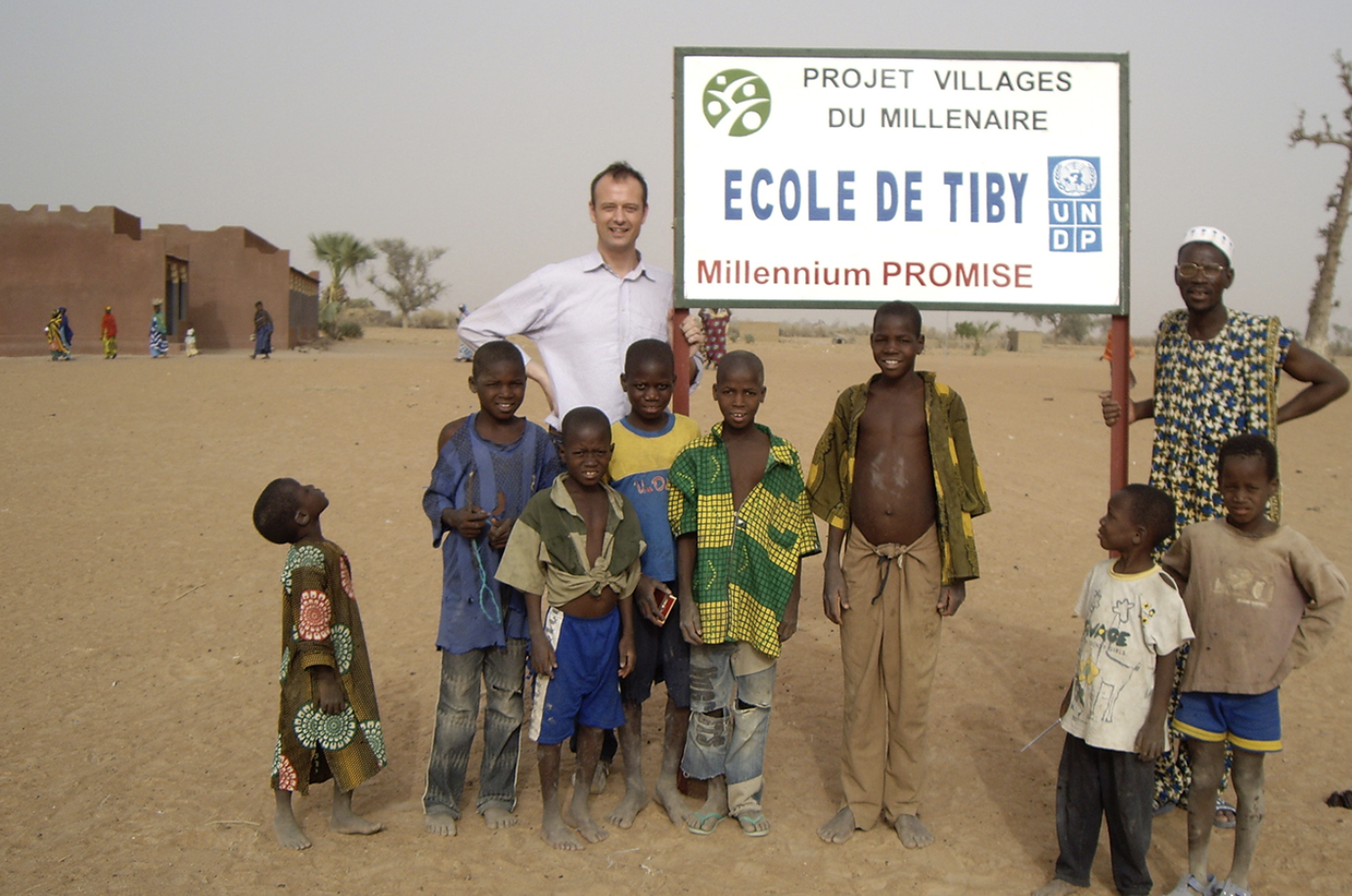
Another village that MVP helps out is Tiby, Mali due to it being one of the poorest areas in Mali. Their dry season is between 9 and 11 months, and the scarce rainfall prohibits dependable access to food. Furthermore, it has had a breakdown of farming systems that have led to the dwindling of agricultural productivity. Similar to Sauri, Malaria is an epidemic that has led to high childhood mortality rate. The goals for this village was to create not only a sustainable farming system but water, as well. MVP also wanted to increase access to education and provide better healthcare. There has been numerous victories to help achieve the goals. Millet yields doubled from micro-doze fertilizer technology and drip irrigation has been introduced to more than 1,300 farmers. There is also vegetable gardens that have benefitted nearly 2,800 women and water pipes have been installed. Tiby has built over 100 classrooms and health clinics in the area. Despite these successes, the Millennium Promise Organization explains how critics claim that unemployment is still high and there is a lack of formal training for farmers in the highly populated area. In order for these farmers to escape poverty, they need proper training from MVP. Mali’s GDP is $15.29 billion, GNP was $15 billion, and HMI was .442.
In my opinion, I think MVP has an innovative approach that countries suffering from poverty have not seen before. By customizing their goals based on the village’s needs, it allows the people that live there to get the resources they may be missing to thrive. Even though it is conquering large problems, I believe that they are taking the correct steps. Their urgency is transforming and saving lives daily. Although this plan to eradicate poverty is helping, I think that extreme poverty is impossible to eliminate with just this project. It is necessary to have more organizations and people supporting MVP in order to successfully eliminate poverty.
Sources
Sachs, Jeffrey. “The Age of Sustainable Development.” Chapter 14. Print.
Radelet, Steven. Emerging Africa- How Countries are Leading the Way. Foreword. Chapter 1. Chapter 3.
“Sauri, Kenya.” Millennium Villages, millenniumvillages.org/the-villages/sauri-kenya/.
“Tiby, Mali.” Millennium Villages, millenniumvillages.org/the-villages/tiby-mali/.
————————————————————————————————-
Blog Post 1: What creates and diminishes poverty?
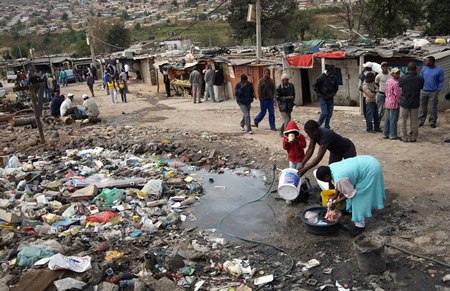
What if poverty was not purely about money? In both of Jane Novogratz’s TED talks, she takes time to discuss poverty in more than the economic terms that individuals might define it as. Novogratz mentions that although poverty can be defined as the 4 billion people on earth that are making less than $4 a day, she takes it to the next level by incorporating the different layers of this state of being. Ultimately, she defines poverty as a condition of lack of choice and freedom. She discusses how over her years of working with individuals in developing countries that poverty does not look a certain way. Factory workers, farmers, and drivers are among these people that pay 30 to 40 times more than what their middle-class counterparts do. Moreover, her main message is that these people, which come from different backgrounds, are willing to and in fact do prosper when the chance is given to them. Another Ted Talk on this issue is 3 Reasons Why We Can Win the Fight Against Poverty by Andrew Youn. Youn challenges the idea of poverty as one that is too big to solve and continues to deconstruct the stereotypical images of poverty. He does this by explaining that these individuals do not lack hospitality, rather their potential or opportunity due to lack of food, health, and other necessities to have the chance to thrive.
https://www.ted.com/talks/andrew_youn_3_reasons_why_we_can_win_the_fight_against_poverty/up-next#t-120897
I strongly agree with this message that poverty is due to lack of opportunity. I believe this, because in America there is endless realms of opportunity compared to Africa. Constantly we hear stories of individuals building successful business models. However, in Africa a citizen cannot just build a business model simply because they have so many challenges to distribute it. Furthermore, I have done service work and found that people living in poverty are driven. In most of my conversations, I have found that their history has not allowed them to have the opportunities that I or my peers have been exposed to.
How can the SDGs help nations throughout the world? According to Jeffrey D. Sachs in “The Age of Sustainable Development,” “The goal for SDGs is having extreme poverty eliminated, social trust encouraged through policies that strengthen community, and the environment is protected from human-induced degradation.” All of these components have different parts that construct them. For example, in order for social trust to be encouraged their needs to be good governance and hurting other species on the planet from human actions. In short, the vision of the SDGs is economic improvement for the 7.2 billion people on Earth by guiding the future source of economic and social development on this planet.
Neoliberalism threatens the goals of the SDGs. John McCarthur in “Own the Goals” discusses World Bank and IMF encouraging countries to cut government spending on public programs. This resulted in increase of poverty and death in Africa and other developing countries. This ultimately fueled the creation of the eight MDGs, which launched in March 2002.
McArthur also refers to players on the bench, as individuals who worked indirectly with the MDGs but refused to publicly support them. The players on the bench include President George W. Bush, State Department officials, and the United States as a country. With the United States as one of the most powerful countries, McCarthur criticizes that by not directly engaging with the MDGs when they first came out, it damaged not only the country’s image but could have fostered international goodwill. Even though a lot of the other countries in the world were engaging in the MDGs, one cannot help but wonder if even more countries would have taken part if the United States directly supported it since the beginning. Additionally, the United States missed a chance on having a foot in the door later on international topics. Now that the United States support the goals, what can the countries participating in implying the goals do directly to help out?
Now that the United States support the goals, what can the countries participating in implying the goals do directly to help out? More aid money is the UN Millenium Project and British Prime Minister Tony Blair’s recommendation along with reduced corruption and better governance, according to “How to Help Poor Countries” article. Aid programs have greatly improved the health of people with rather “simpler” illnesses such as diarrhea to offering contraception to women. The suggestions made by the authors are homegrown institutional competence like the Marshall Plan and the government effectively using the assistance given. I strongly agree that to give developing countries more aid money in exchange for better governance. This provides an incentive for the government to manage the country better. It holds them accountable, while still providing opportunities for the citizens to move forward. This opportunity gives them healthcare, clean water, housing, but most importantly a chance for us to live united.
Sources:
Sachs, Jeffrey D. “Introduction to Sustainable Development.”
McCarthur, John W. “Own the Goals.” Foreign Affairs. 2002-2006.
Birdsall, Nancy. Rodrik, Dani. Subramanian, Arvind. “How To Help Poor Countries.” 2005.
http://www.ted.com/playlists/67/the_quest_to_end_poverty.html
http://www.ted.com/talks/jacqueline_novogratz_invests_in_ending_poverty.html
 Case Studies in an Inter/Multicultural World