Blog Post 2: There is good news in Africa?

By: Anna Herman

When is the last time you heard about good news in Africa? Many Africans have the perspective that good news in Africa is often vacant from headlines. There is a substantially large imbalance, as good news is often presented as an “afterthought” according to Radelet’s article. The factors that are classified as good news display the economic growth rates of 2% per capita since 1996, deepening democracy away from dictatorships, trade and developing doubling, stronger leadership, and decreasing poverty in seventeen African countries. These countries are calling for the dismissal of conflict, stagnation, and dictatorships that are apart of their history. Some of the countries that Radelet mentions as recent successes include the economic growth of Ghana causing the income of an average citizen by more than 40 percent, Mozambique’s GDP growing 7.5 percent for the past 15 years, and Cape Verde increasing the average income by 66 percent since 1993. These increasing economic numbers are merely the beginning of good news in the countries. Mali’s poverty has fallen by about one third and infant mortality rates have dropped in a majority of the emerging countries that are breaking away from history. Blatantly opposing the typical pessimistic headlines that cover newspapers, these dynamic countries are creating more accountable and democratic governments, better incomes, new investment opportunities, decreasing poverty, and improving healthcare. These countries did not easily change their course of history. They did so by opposing the government in political protests that forced government officials to guarantee civil liberties. These hardships led to the election of Nelson Mandela as president in 1994, sparking the spread of democracy. From there Africa has seen numerous leaders surfacing, and they are helping expose the country to ideas on an international platform.
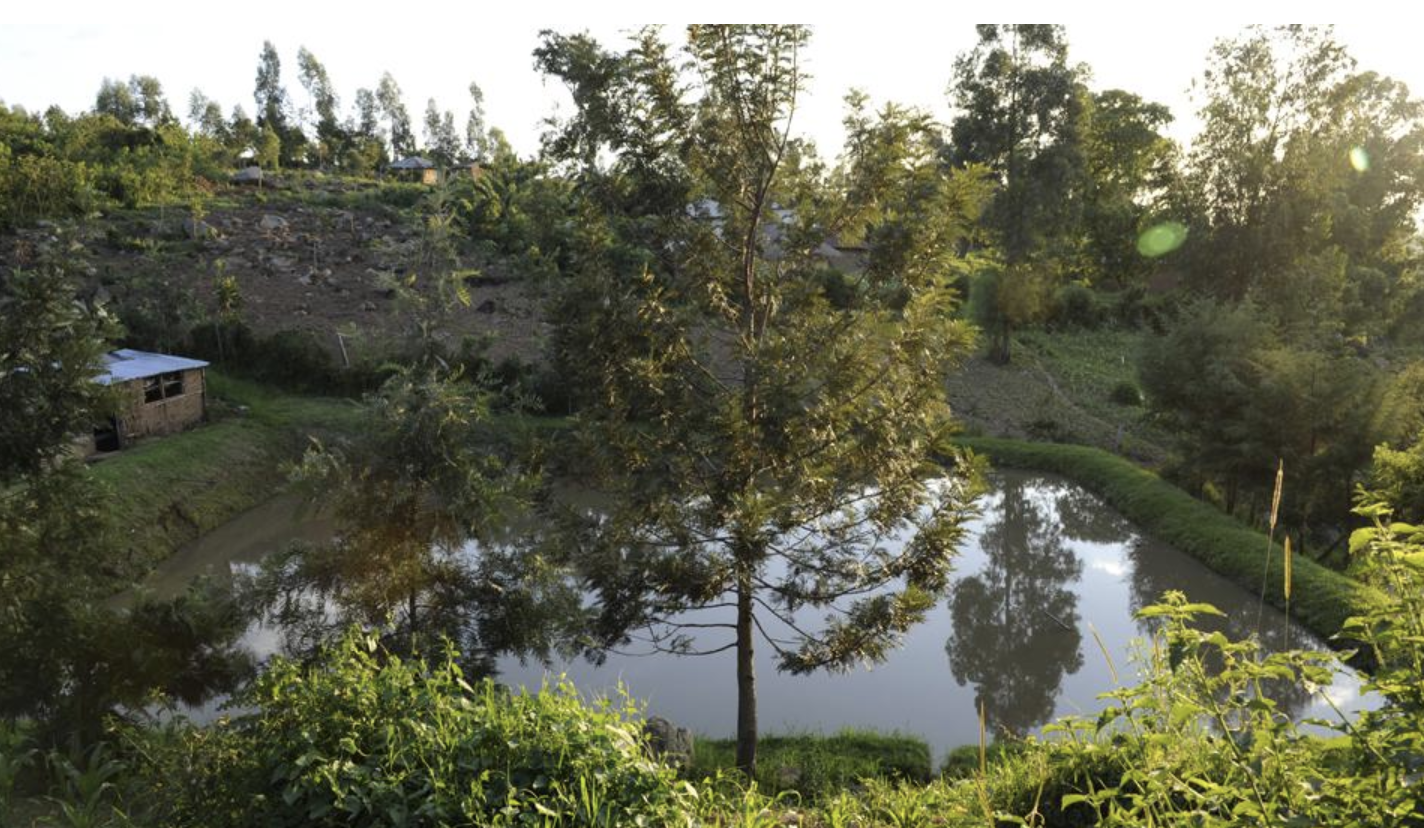
The first MVP village in Sauri, Kenya. It is also the organization’s largest site.

The Millennium Villages Project or MVP is a leading international nonprofit organization that is committed to eradicating poverty, hunger, and preventable disease by achieving the Millennium Development Goals. In Sachs article, he explains that most urgent task of these goals is eradicating poverty. This is due to fact that poverty is the matter between life and death for 1 billion people. Ross Levine and William Easterly explain that Africa has been implementing policies for political and financial stability, and that neighboring countries acting together has resulted in great success over the past 30 years. The Millennium Villages Project is searching for more success in Africa by offering an “innovative integrated approach to rural development” in villages.

Sauri, Kenya is the first and largest site of MVP. The organization chose this village due to the land farming being extremely insufficient to support a family and the prevalence of Malaria year-round. The goal for the village was to increase the income of 80 percent of the population from $1/day and decrease malnutrition, especially in children. Since MVP has started operating in Sauri, over 21,000 children in school are provided a daily meal and the average maize field has increased from 1.9 to 5.0 tons per hectare increasing income. Further successes include income diversification, nearly all pregnant women being tested for HIV, and household’s access to water supplies doubling. In an Alicia P.Q. Wittmeyer’s article, she explains how the critics have commented that MVP is in fact conquering too much and needs to take small steps in order to see continued success. However, MVP has publicly opposed this concept and stated that there is no room for baby steps when dealing with such crises. Kenya’s GDP is $79.2 billion, GNP is $161.5 billion, and it’s HDI is .590.

Another village that MVP helps out is Tiby, Mali due to it being one of the poorest areas in Mali. Their dry season is between 9 and 11 months, and the scarce rainfall prohibits dependable access to food. Furthermore, it has had a breakdown of farming systems that have led to the dwindling of agricultural productivity. Similar to Sauri, Malaria is an epidemic that has led to high childhood mortality rate. The goals for this village was to create not only a sustainable farming system but water, as well. MVP also wanted to increase access to education and provide better healthcare. There has been numerous victories to help achieve the goals. Millet yields doubled from micro-doze fertilizer technology and drip irrigation has been introduced to more than 1,300 farmers. There is also vegetable gardens that have benefitted nearly 2,800 women and water pipes have been installed. Tiby has built over 100 classrooms and health clinics in the area. Despite these successes, the Millennium Promise Organization explains how critics claim that unemployment is still high and there is a lack of formal training for farmers in the highly populated area. In order for these farmers to escape poverty, they need proper training from MVP. Mali’s GDP is $15.29 billion, GNP was $15 billion, and HMI was .442.
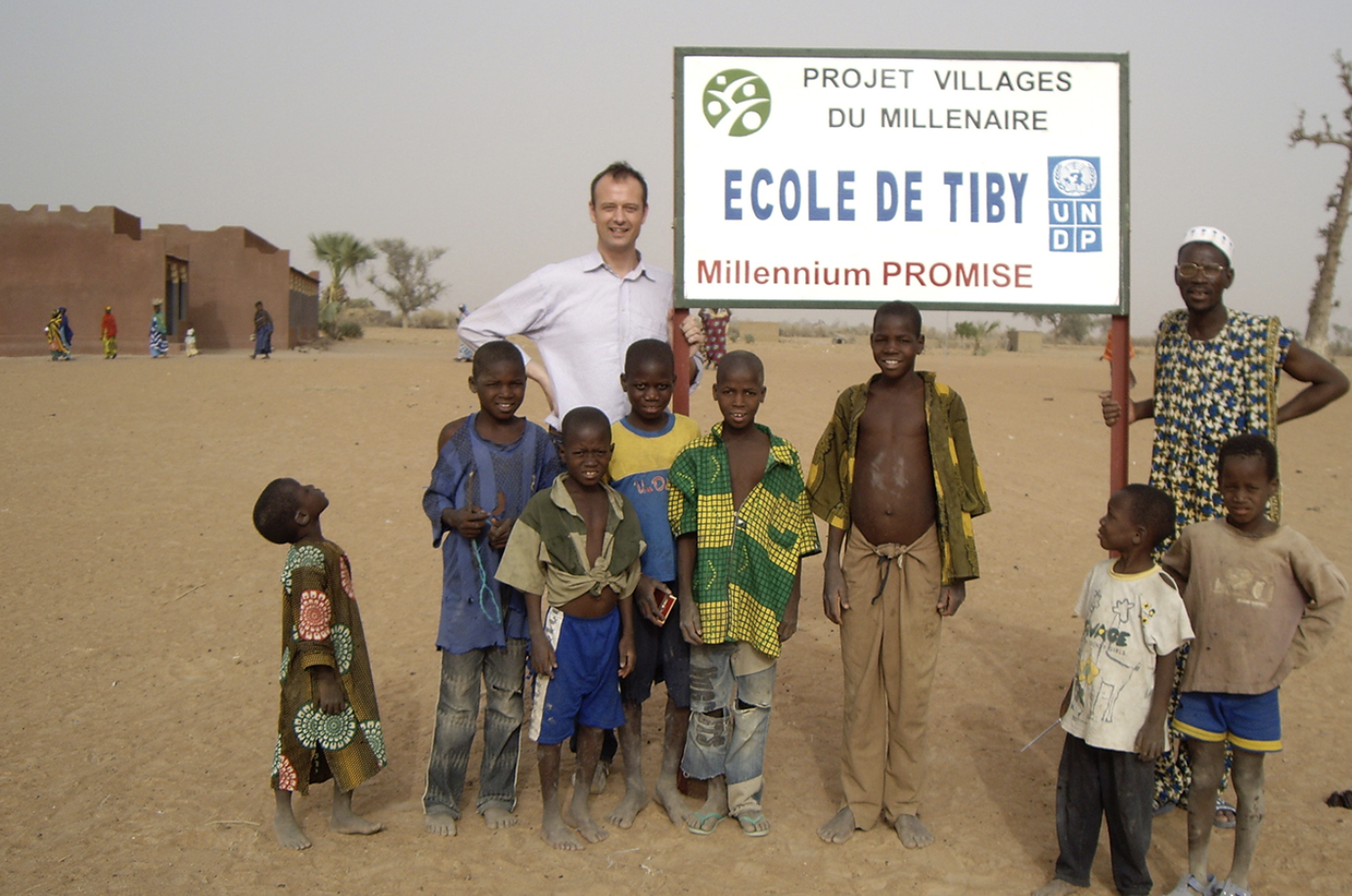
An MVP worker stands next to children in Tiby celebrating World Malaria Day. World Malaria Day is an opportunity to reflect on progress made fighting the disease.

In my opinion, I think MVP has an innovative approach that countries suffering from poverty have not seen before. By customizing their goals based on the village’s needs, it allows the people that live there to get the resources they may missing to thrive. Even though it is conquering large problems, I believe that they are taking the correct steps. Their urgency is transforming and saving lives daily. Although this plan to eradicate poverty is helping, I think that extreme poverty is impossible to eliminate with just this project. It is necessary to have more organizations and people supporting MVP in order to successfully eliminate poverty.

Sources

Sachs, Jeffrey. “The Age of Sustainable Development.” Chapter 14. Print.

Radelet, Steven. Emerging Africa- How Countries are Leading the Way. Foreword. Chapter 1. Chapter 3.

“Sauri, Kenya.” Millennium Villages, millenniumvillages.org/the-villages/sauri-kenya/.

“Tiby, Mali.” Millennium Villages, millenniumvillages.org/the-villages/tiby-mali/.
Blog #1

By Rachel Brunts

    a)   Jacqueline Novogratz defines poverty, within her TED talk ‘Invest in Africa’s own solutions’, through her personal experiences throughout her whole life. I was shocked to hear her interaction with the young boy wearing her sweater she gave to Goodwill, but personally I did not enjoy her TED talk as much as I enjoyed Mia Birdsong’s TED Talk ‘The Story we tell about poverty isn’t true’. Although Novogratz did provide a respectable answer for solving poverty, stating that we need to, “Build viable systems on the ground that deliver critical and affordable goods and services to the poor”. Counteracting most Americans views of just simply donating money, and implying that we need a more hands-on approach to end poverty in Africa. I believe her main message to the audience was that we need to stop looking at Africa and other poor countries as, “them”, and start referring to them as, “us”. Overall I thought Novogratz’s  TED talk was good, but personally not as impactful to me.

     b)

As stated in the United Nations Development Programme article, ‘Sustainable Development Goals’, the SDGs are, “a universal call to action to end poverty, protect the planet and ensure that all people enjoy peace and prosperity. I believe the vision/goal of the SDGs is to make our world a cleaner, safer, and more prosperous community by building off MDGs successes. Officially, the ‘2030 Agenda for Sustainable Development’ best summarizes their vision stating, “We can be the first generation to succeed in ending poverty; just as we may be the last to have a chance of saving the planet. The world will be a better place in 2030 if we succeed in our objectives”.

As far as the neo-liberalisms effect on the SDGs, the study, ‘Sustainable Development Goals In the Age of Neoliberalism’ states, “It is more probable that the global trade tilt will be less away from neoliberalism than towards new rules, agreements or simply unilateral actions”

c)

When John McArthur discusses the, “Players on the Bench”, in ‘Own the Goals’, he is referring to U.S. President George W. Bush and The World Bank. McArthur criticizes these powerful forces as the “players on the bench”, because of their shared failures of inactively participating in the Millennium Development Goals. I believe this characterization to be both humorous and fitting.

  President Bush is definitely a player on the bench through his attempted team player attitude to support part of the MDG efforts, yet still refusing to fully submerge himself within the MDG targets; therefore, sitting, “on the bench”. McArthur criticized President Bush’s stands, stating that, “by refusing to directly engage with the MDGs in their early years, the United States missed an opportunity to highlight its contributions to development efforts and foster international goodwill.”

The World Bank also had hesitations supporting MDG. McArthur summarized their initial delay stating, “Early resistance was in part due to bureaucratic resentment of the UN for its having been given such a prominent role on development issues.” Also, this essay explains that The World Bank focuses primarily on economic issues over social issues, such as the MDGs, so personally I understand why McArthur would label The World Bank as, “players on the bench”.

Although, McArthur does still critics The Bank for their stance stating, “the bank, as a main interlocutor with the developing world, should have helped poor countries assess how they could achieve the MDGs and sounded the alarm about donor financing gaps”.  

d)       

After reading “How to Help Poor Countries” I have learned that more aid money can be both good and bad. Aid money effects poor and rich countries differently depending on their economic system and society. I found it embarrassing to learn that the best way to help poor countries is by letting them help themselves. As the text stated, “help developing countries help themselves, wealthy nations must begin to lift the burdens they impose on the poor.” As an American, I feel as though I have always thought the best way to help the poor is to donate money. After crafting this blog post I have learned eye-opening knowledge on the perception of the less fortunate and their potential.            

Some suggestions to help the poor included: business opportunities, individualized economic policy, experimentation, and monitor money loaned appropriately. For example, “How to Help Poor Countries” stated, “The World Bank and other organizations are designing programs with countries in which resources are disbursed not in exchange for policy reform but on the basis of pre-agreed benchmarks of progress”. I agree with the stance of this article and value its viewpoint. There is no perfect formula to solve poverty; we just have to work harder than donating $1 to Haiti, at the grocery store checkout line, if we truly want to make an impact.

Blog Post 1

Blog Post 1: What creates and diminishes poverty?

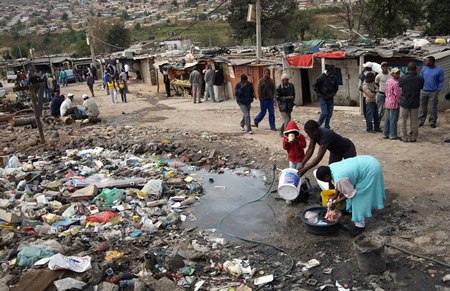
The lack of opportunity, such as clean drinking water, is one of the hurdles of underdeveloped countries.

What if poverty was not purely about money? In both of Jane Novogratz’s TED talks, she takes time to discuss poverty in more than the economic terms that individuals might define it as. Novogratz mentions that although poverty can be defined as the 4 billion people on earth that are making less than $4 a day, she takes it to the next level by incorporating the different layers of this state of being. Ultimately, she defines poverty as a condition of lack of choice and freedom. She discusses how over her years of working with individuals in developing countries that poverty does not look a certain way. Factory workers, farmers, and drivers are among these people that pay 30 to 40 times more than what their middle-class counterparts do. Moreover, her main message is that these people, which come from different backgrounds, are willing to and in fact do prosper when the chance is given to them. Another Ted Talk on this issue is 3 Reasons Why We Can Win the Fight Against Poverty by Andrew Youn. Youn challenges the idea of poverty as one that is too big to solve and continues to deconstruct the stereotypical images of poverty. He does this by explaining that these individuals do not lack hospitality, rather their potential or opportunity due to lack of food, health, and other necessities to have the chance to thrive.

3 Reasons Why We Can Win the Fight Against Poverty Ted Talk
https://www.ted.com/talks/andrew_youn_3_reasons_why_we_can_win_the_fight_against_poverty/up-next#t-120897

I strongly agree with this message that poverty is due to lack of opportunity. I believe this, because in America there is endless realms of opportunity compared to Africa. Constantly we hear stories of individuals building successful business models. However, in Africa a citizen cannot just build a business model simply because they have so many challenges to distribute it. Furthermore, I have done service work and found that people living in poverty are driven. In most of my conversations, I have found that their history has not allowed them to have the opportunities that I or my peers have been exposed to.

How can the SDGs help nations throughout the world? According to Jeffrey D. Sachs in “The Age of Sustainable Development,” “The goal for SDGs is having extreme poverty eliminated, social trust encouraged through policies that strengthen community, and the environment is protected from human-induced degradation.” All of these components have different parts that construct them. For example, in order for social trust to be encouraged their needs to be good governance and hurting other species on the planet from human actions. In short, the vision of the SDGs is economic improvement for the 7.2 billion people on Earth by guiding the future source of economic and social development on this planet.

Neoliberalism threatens the goals of the SDGs. John McCarthur in “Own the Goals” discusses World Bank and IMF encouraging countries to cut government spending on public programs. This resulted in increase of poverty and death in Africa and other developing countries. This ultimately fueled the creation of the eight MDGs, which launched in March 2002.

McArthur also refers to players on the bench, as individuals who worked  indirectly with the MDGs but refused to publicly support them. The players on the bench include President George W. Bush, State Department officials, and the United States as a country. With the United States as one of the most powerful countries, McCarthur criticizes that by not directly engaging with the MDGs when they first came out, it damaged not only the country’s image but could have fostered international goodwill. Even though a lot of the other countries in the world were engaging in the MDGs, one cannot help but wonder if even more countries would have taken part if the United States directly supported it since the beginning. Additionally, the United States missed a chance on having a foot in the door later on international topics. Now that the United States support the goals, what can the countries participating in implying the goals do directly to help out?

Now that the United States support the goals, what can the countries participating in implying the goals do directly to help out? More aid money is the UN Millenium Project and British Prime Minister Tony Blair’s recommendation along with reduced corruption and better governance, according to “How to Help Poor Countries” article. Aid programs have greatly improved the health of people with rather “simpler” illnesses such as diarrhea to offering contraception to women. The suggestions made by the authors are homegrown institutional competence like the Marshall Plan and the government effectively using the assistance given.  I strongly agree that to give developing countries more aid money in exchange for better governance. This provides an incentive for the government to manage the country better. It holds them accountable, while still providing opportunities for the citizens to move forward. This opportunity gives them healthcare, clean water, housing, but most importantly a chance for us to live united.

Sources:

https://www.google.com/search?q=africa+poverty&source=lnms&tbm=isch&sa=X&ved=0ahUKEwi-sfjNvpTgAhUQOq0KHRz5DFMQ_AUIDigB&biw=1090&bih=703#imgrc=PTT0kr5bsHrGhM:

Sachs, Jeffrey D. “Introduction to Sustainable Development.”

McCarthur, John W. “Own the Goals.” Foreign Affairs. 2002-2006.

Birdsall, Nancy. Rodrik, Dani. Subramanian, Arvind. “How To Help Poor Countries.” 2005.

http://www.ted.com/playlists/67/the_quest_to_end_poverty.html

http://www.ted.com/talks/jacqueline_novogratz_invests_in_ending_poverty.html

https://www.ted.com/talks/andrew_youn_3_reasons_why_we_can_win_the_fight_against_poverty/up-next#t-120897