By: Tori Travers
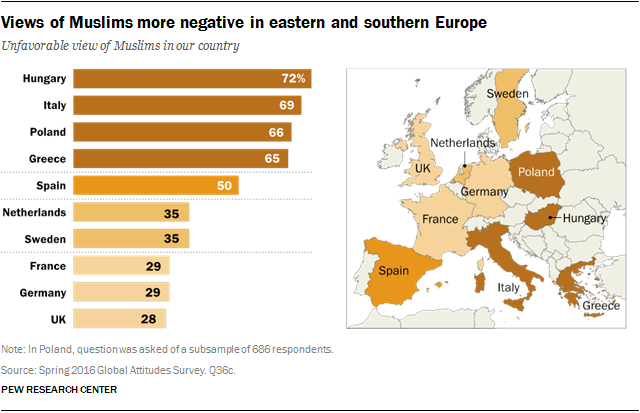
In the article, Islam and the West: Narratives of Conflict and Conflict Transformation, Funk and Aziz write that narratives move many people to conflict dynamics. When someone believes a narrative that wither highlights exclusivity and promotes negative images of adversaries they are more likely to not reach conflict transformation. When it comes to the narrative that The West and America’s views of the Islam, the narrative is split. On both sides there is an existence of a leaning towards intercultural peace, which is likely due to an “agreement on matters related to intercultural relations and historical memory,” (Funk and Aziz). Having views such as slurring historical facts lead to a single story or intercultural confrontation on both sides of the narrative as well. As “Westerners” begin to more frequently regard Muslims in the Middle East as the “other,” something opposite of an “American” or someone from the West, then the more frequently and willing Middle Easterners will adopt a similar language of the West. For Muslims in the Middle Easterners, their negative views of the West manifests toward their sexuality, family lifestyles, misconduct and treatment of public safety. According to Islam and the West: Narratives of Conflict and Conflict Transformation, “Muslims and Westerners who narrate the story of confrontation seek to place Islamic-Western relations within an ‘us versus them’ framework..” Intercultural compatibility works to counterbalance the ideas of misperceptions across cultures. This means stopping the views that lead to comparison and beginning to advocate for thinking of the similarities and gaining cultural empathy.
According to Frum, immigration is a good thing but comes with both social and political costs. Immigrants cost taxpayers a lot of money, cost the government money and don’t benefit lower class Americans. It’s not just in recent times in America that a population has felt that there are too many immigrants in their country. Frum wrote, “One-third of the British people who voted in 2016 to leave the European Union cited immigration as their primary reason. In Germany, 38 percent rate immigration as the most important issue facing their country.” Frum believes that the U.S. has not planned in the past and is not planning for the number of immigrants entering our country. The number of people living in America is expected to exceed 400 million by 2050 if the same immigration policies are kept. Overpopulation leads to more pollution and an increased carbon footprint. I agree with Frum in that the number of people in our country can have negative impacts on the Earth and in particular, the U.S. The hard part is, to be a humane and just country, taking in immigrants is crucial. Life in the U.S. can give many people opportunities such as cheaper housing and better living standards. I’m not sure if there is a “right level” of immigration. I agree that immigration should not be thought of as a symbol, such as a wall, but as a system. We need to work on improving our language of immigration, which follows with learning more about those who are entering our country. Frum believes that shifting the focus away from family and more toward talent, knowledge and skill-level would help the perceived thoughts of American acceptance. I also agree that deporting a mass number of already housed and comfortable immigrants is serving no one and harming our country rather than helping. We need to see all who call America home as having a shared identity rather than pointing out our differences.





 Case Studies in an Inter/Multicultural World