By: Anna Herman
It is no secret that Muslim societies are at the center of pressing issues around the world, especially in Western cultures. In The No-Nonsense Guide to Islam, Ziauddin Sardar and Merryl Wyn Davies explain the history that even when most Muslim countries gained their independence in 1950, the decades that were supposed to be filled with innovation were rather occupied with patterns of European colonial dominance. The political leaders emerged from Westernized elites, who still to this day suppress almost all forms of the religious traditions of Islam. Obviously, this sparked tension between the rulers and the citizens.
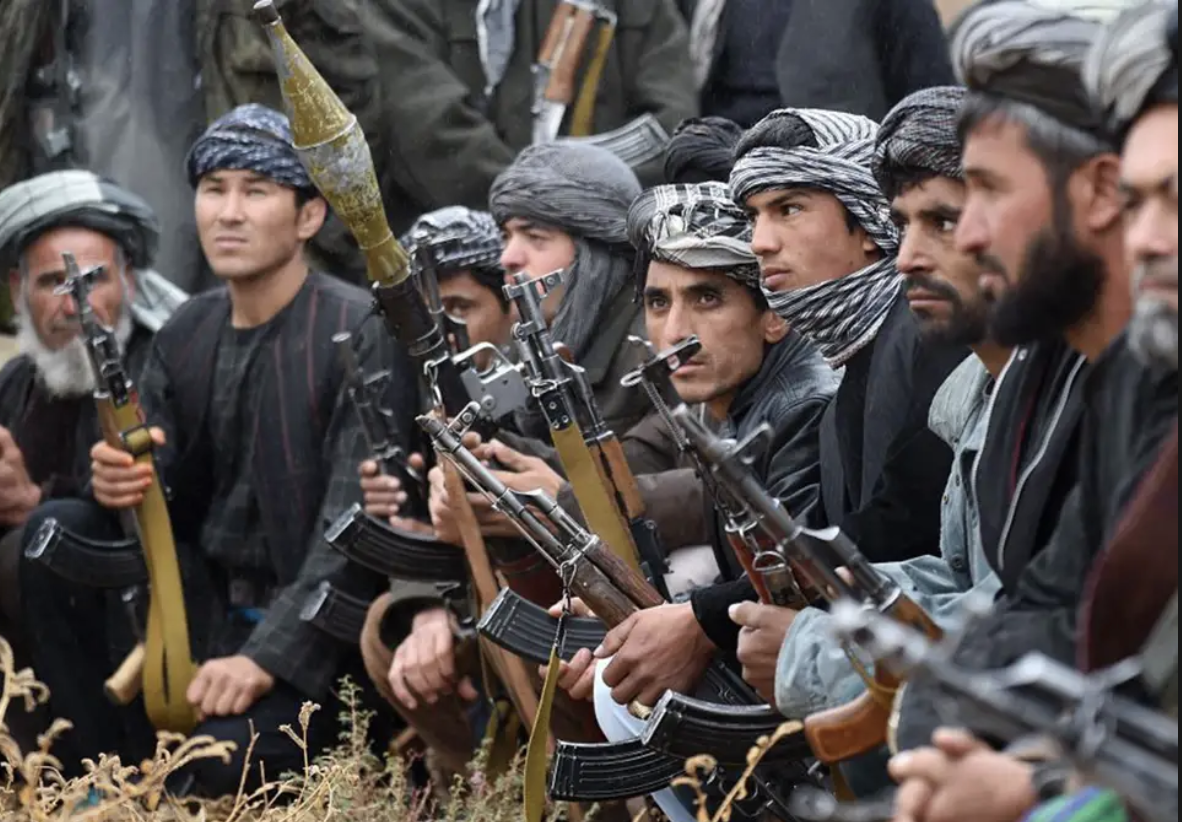
The “jihadi” movement in Afghanistan brought the Soviet Union down. Keep in mind that this was one of the largest and strongest countries at the time. This gave more militant elements in the reform movements and what power tasted like for the first time. This led to the Islamic Revolution in 1979. The authors emphasize that this a power in which the society had never had before, and it led to such a craving for it. Ultimately, it piloted the creation of the Taliban, in order to apply the ideal Islamic state. As we are aware, the Taliban is an enemy of the United States due to their open fighting and attacks on individuals and communities. However, the authors shed light that the modern and moderate elements in Muslim society experience just as much conflict with the Taliban as we do.
As I briefly mentioned before, the fundamentalist goal is to apply what they believe is the ideal Islamic state, and that is implementing sharia or Islamic law. Sardar and Davies explain how the rubric of the sharia is nearly opposite of the Qur’an. We have discussed how the Qur’an is the religious text that is widely used in practicing Islam today. It has little rules in it and focuses on the religion that is constructed of God and the virtues. However, the sharia rubric is mostly fiqh. Fiqh is classical jurisprudence that was created in the Abbasid time period, which incorporates the logic of Muslim imperialism from the 8th and 9th century. Therefore, rather than a guide to help one practice the religion, like the Qur’an is, the sharia leads to religious rebellion.
Another important factor of the sharia that I would like to mention is the one the puritan fundamentalist focus greatly on: the hudud laws. This is the part of the sharia that spotlights crime and punishment. Although these laws are only applicable in a perfect and just society, the fundamentalists use them as a justification for their violent actions. The idea that sharia is a “law” is even ironic in itself. When a law is implemented it is to protect by taking the moral evolution of humanity into full consideration.
I strongly disagree that Islamic law has always been consumed with “punishment.” Technically, someone could argue that it is when taken literally. I would like you to think of this from a different perspective. In the Bible, God deems that it is okay to sacrifice animals and occasionally people for him. If we recall, God told Abraham to sacrifice his only son Isaac. Although God commands him to stop at the last second, he was suggesting violence and punishment. Even in the 10 commandments, God says if you disobey those then you have sinned and will be punished. That is the entire reason that people go to confession, is to be free from their sins.
Now, a Christian could argue that the story was not to be taken literally, but when a Muslim does it then it becomes problematic. The Bible and the sharia were written hundreds of years ago, and I believe do not hold literal meaning. Although there is a section of the sharia that focuses on crime and punishment, we can see striking similarities present in the Christian text, as well. By giving this example, it takes away the focus of this question being one of the Islamic religion but one of any religious text, even one that is extremely popular in the West.
Musawah is a global movement that is focused on equality and justice in Muslim communities. It has a vision of a world where the basis of all human relations is filled with equality, non-discrimination, justice and dignity. Although this seems nearly impossible, the organization believes that it is extremely achievable, as it works for progress in human rights for Muslim women. The organization as an extremely fitting name as musawah translates to ‘equality’ in Arabic.
Some of their key messages to accomplish their goals is sharing knowledge, connecting people and engaging internationally. They explain that with a holistic approach, it builds and shares knowledge that supports equality in the Muslim family. Secondly, they believe that by connecting people there is an abundant amount of support. Finally, they support human right mechanisms to achieve equality and justice in the family.
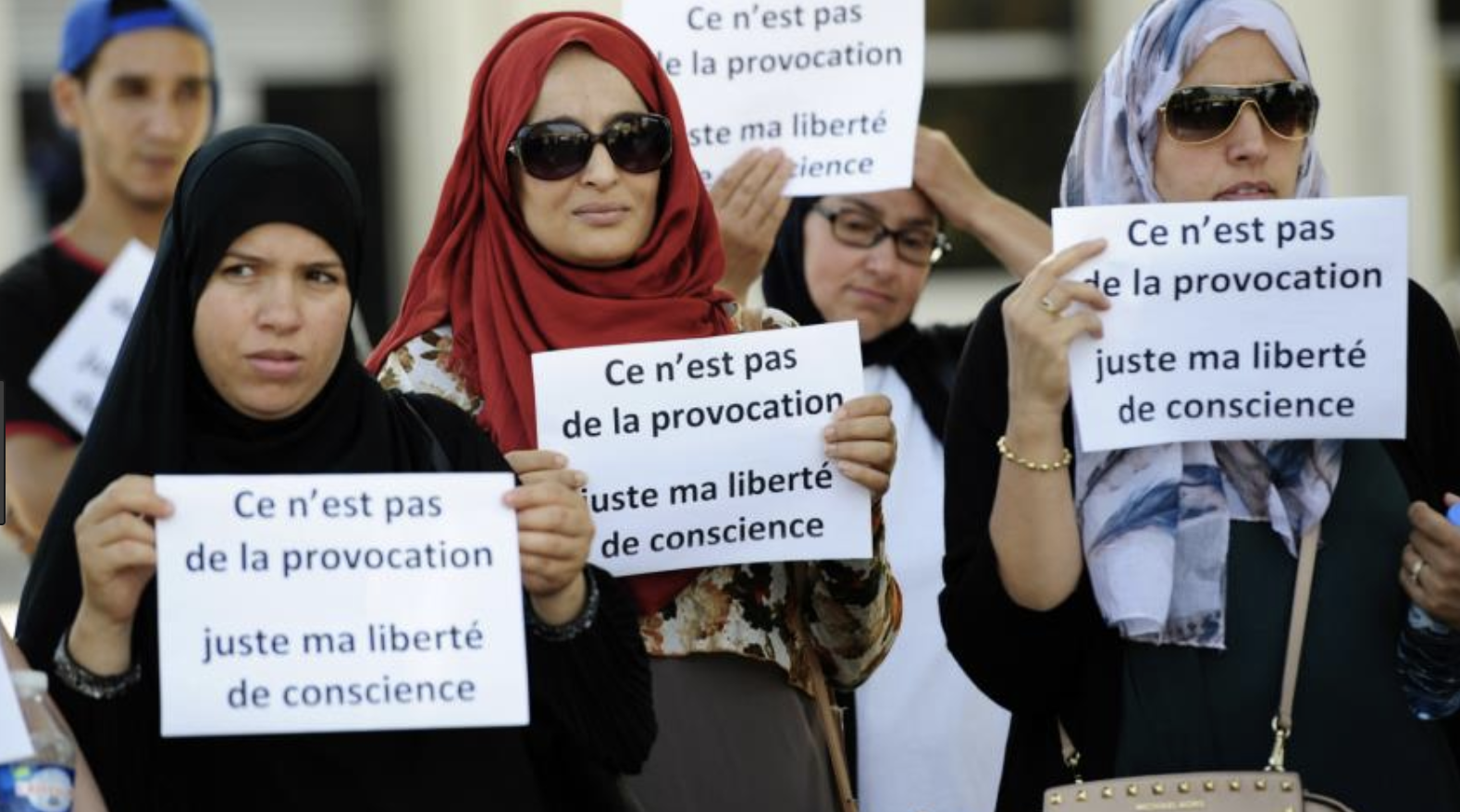
I think this organization is a great tool for Muslim woman, as it openly opposes the sharia laws. Despite the fact that we discussed how they are not as widely used as the Qur’an and often radicalized; they still have presence today. By providing a resource to women, just as any other religion it can only benefit them rather than hurt.
Additional Sources
Sardar, Ziauddin. Davies, Merryl. The No-Nonsense Guide to Islam. Chapter 8: Contemporary Issues. Text.






 Case Studies in an Inter/Multicultural World