By: Anna Herman
The Muslim presence in France was not always a hot-topic issue. According to the Pew Research Center, Muslims today only make up around 5 percent of the population in Europe. However, in countries like France, Germany and Sweden the Muslim population is rapidly growing and appears as if it is nowhere near stopping. The center reported that in 2016 there was around 5.7 million Muslims in France, which makes up 8.8 percent of the country’s population. From 2010 through 2016 Muslims in Europe increased from 3.8 to 39 percent. Although this may sound minuscule, that is increasing the population from 19.5 to 25.8 million individuals.
The LA Times article explains how many of these Muslims trace their roots back to Algeria and Tunisia, both countries are former French colonies. Many of the individuals today had grandparents migrating to help rebuild France after World War II. Then Algeria spend years fighting for its independence from the French. Although this was many years ago, these events impact Muslims today in France. The article explains how European Muslims are condensed in suburbs known as banlieues, that are usually little more than a cement jungle of decrepit high-rises. Although they reside in France, this shows the disparities that European citizens may experience based on the religion, especially one like Islam that has such a rich history.
In recent elections, Muslim immigration has been top issues and that is largely due to these increasing numbers of those in the population. Although a lot of this increase has been due to immigration in Europe, the increase of the Islam community in the future is attributed to the noticeably difference in age of Muslims than other Europeans. Pew Research Center explains that 50 percent of all European Muslims are under the age of 30, which is prime childbearing age. Moreover, the Muslim woman residing in Europe is expected to have 1 more child than a woman who does not identify as a Muslim. These intersecting factors suggest the inevitability for the expansion of this community in Europe, particularly in France.
Laïcité is a term that is very puzzling for those who do not reside in France to fully understand. In this New Republic article, it defines laïcité as France’s principle of secularism in public affairs, aimed at fostering a post-religious society. It originated during the French Revolution when France was seeking separation from the church and state. Ultimately this unique term refers to the freedom of citizens and of public institutions from the influence of organized religion. When laïcité originated it was aimed at separation from the Catholic Church, the Islam religion now conflicting with this concept in France. In 2004 France passed a law that banned religious symbols and clothing in public schools, this further marginalized Muslims as they opted for Muslim schools. This further separated them from the community.
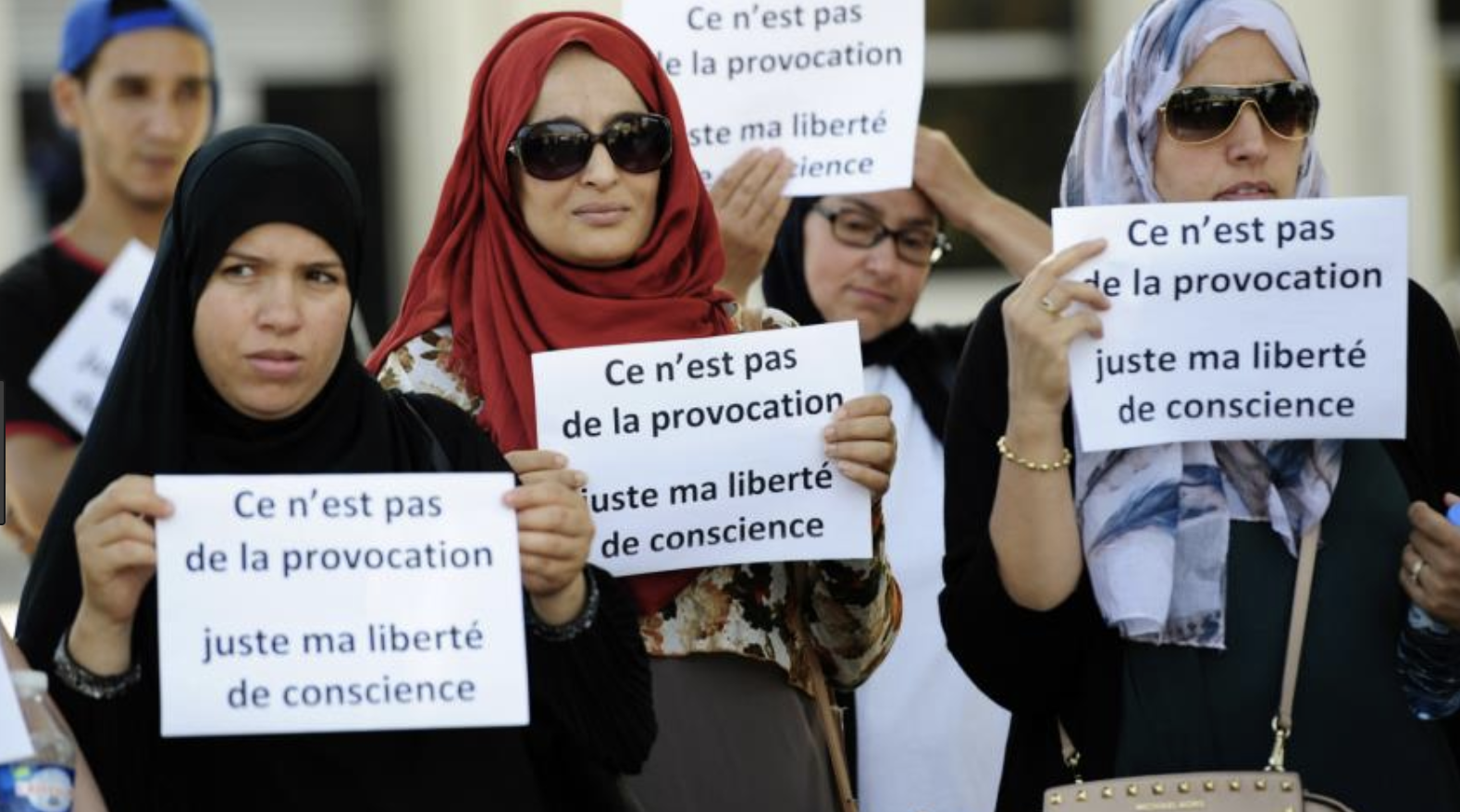
Like I mentioned before, Muslim immigration is a controversial issue, and the presence of Muslims in France has become a political ideology. This Prospect Magazine article suggests that laïcité is a cornerstone of republican values. Similarly, it also reports that the far right is the key factor to upholding these laws that many feels is discriminatory and old-fashioned. With the increase of Muslims presence in the country, it will only create more disparity and separation among the citizens residing there.
No matter where it is in the world, there has been a long history of controversy over women wearing veils, especially in Western culture. There are many stereotypes that I have heard throughout the years that are filled with false information. Some of these include men forcing women wear these scarves and it makes a women look less American. These accusations could be further from the truth. Muslim women choose to wear a veil or headscarf as a symbol of their religion. This Institute of Islamic Information and Education article even poses the idea that wearing a headscarf may be the “truest test” of one’s religion. As we discussed last week the Islam religion is based on a text, The Qur’an. This is similar to the Bible in the Christian religion that offers guidance and rules. One of the principles is for women to have modest coverings. That is where this headscarf originates from that is a distinctive part of the Islam religion.
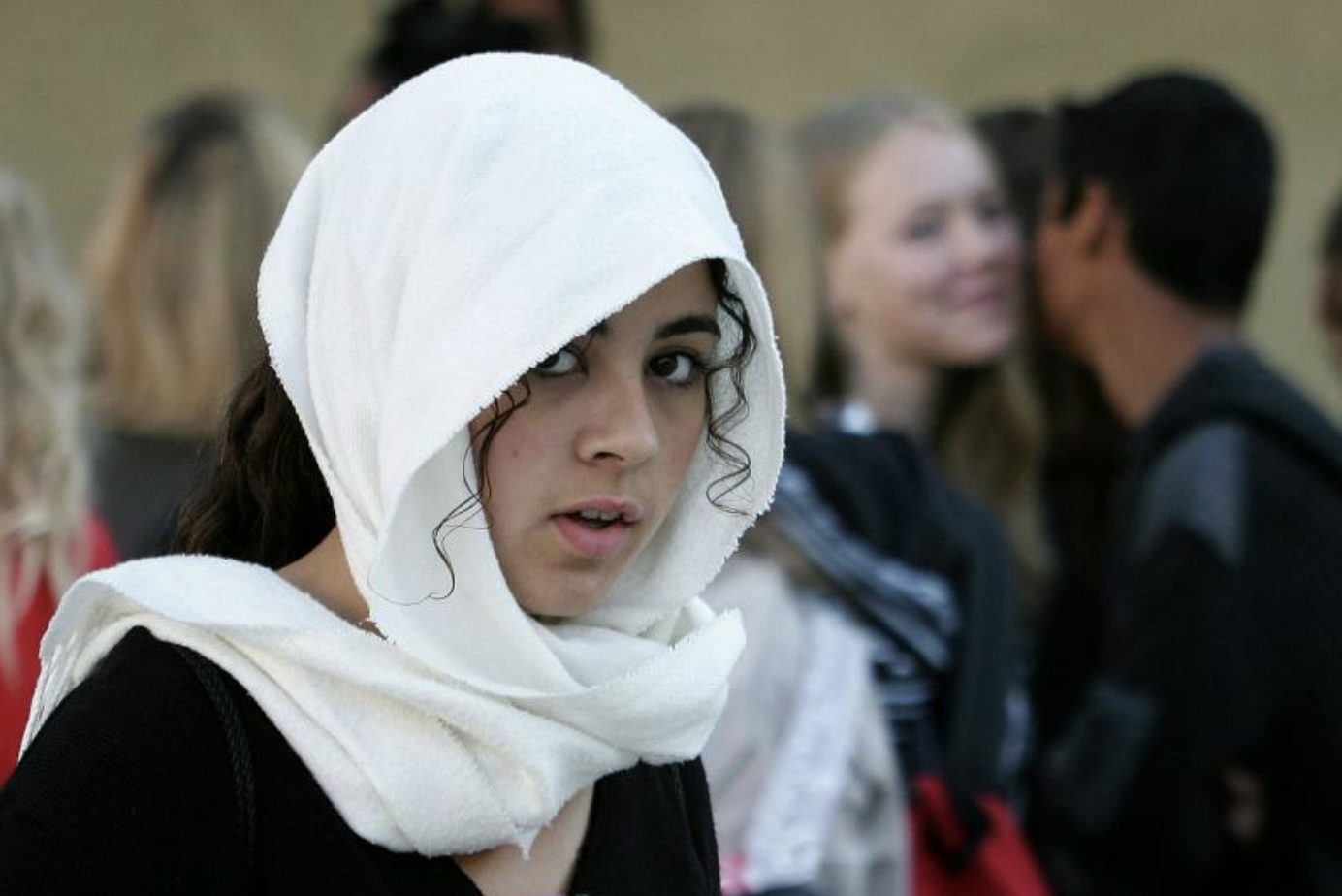
Although a hijab is an individual’s choice like wearing a cross, it is seen as a threat to Western culture. United Nations University explains that this is largely due to the tendency to pair terrorist attacks with Islam. These attacks that are often labeled as acts originating from the Islam religion include the Iran Hostage Crisis in 1979 and the 9/11 attacks in 2001. Obviously when a woman is wearing a hijab, it brings back to life a long-standing superficial security threat to Western soil among America. Additionally, it collides with societal norms in Western culture. These women do not look the same as many others, which causes citizens to question how can they be European or American? This is largely due to the media perpetuating Muslims as having one and only one identity, rather than including their nationality too. This ignorance not only discriminates individuals but has real-life consequences that have and can result in violence

 Case Studies in an Inter/Multicultural World