By: Anna Herman
What are some of the myths about Muslims in Europe that Justin Vaisse discusses?
The first myth Vaisse sheds light on is the belief that being Muslim constitutes a fixed identity, and it is one that is strong enough to fully characterize a person. He illustrates that this is present by discussing newspaper article from the Washington Post that uses the term “Muslim” to describe individuals migrating West. These writers of the article neglect the individuals’ gender, race, social class and other principles that make up their being. Vaisse also cites the widely used phrase in the media during the riots in France as “Muslim riots in France” when in fact they had nothing to do with the Islam religion. This is expanding the false stereotypes of the religion that are embedded in society.
The second myth is that Muslims in Europe are inherently foreign, in one way or another. This is the equivalent of visiting Middle easterners who are alien to the “native” culture. Despite the popular opinion, European culture has included Muslim elements from as early as the 8th century. Furthermore, there is between 15 and 17 million Muslims in EU-27 countries. This is not a small amount and many individuals are born in Europe rather than abroad. Europe is their home, just like I call the United States home, despite the history of my religion.
The third myth is that Muslims in Europe form a “distinct, cohesive and bitter group.” Vaisse explains how Muslims are the extreme opposite of what the 2005 Foreign Affairs article labels them as. He explains how Muslims in Europe and a national level are anything but a cohesive group. This is because of the divisions between countries, social statuses, ethnicity, and political views. To label them as one community without variety is extremely misleading to people.
The fourth and final myth Vaisse addresses is that Muslims are demographically gaining on the “native” population. What lies behind this myth is the assumption that Muslims form a distinct demographic bloc defined by religion and that is incapable of being a part of society. When in reality, there is significant amounts of intermarriage and conversions. Muslims are mostly lay-abiding citizens and are extremely patriotic to where they live. Since EU immigration is extremely regulated, Muslims will never make up more than 6 percent of the population in the approaching decades.
Why is it important to make a distinction between the religious and political dimensions of Islam?
It is extremely important to make a distinction between religious and political in everyday life, and it is even more important to define these terms when discussing the dimensions of Islam. Because this religion has misconceptions, by defining these differences it allows us to understand the religion more thoroughly. In Shireen Hunter’s book, Islam, Europe’s Second Religion, she discusses that the political and religious dimensions of Islam that are based on two very different approaches.
Muslims worship directly from The Quran. Although individuals are unified through this central text, the politics can and will differ among the members. This greatly depends on the society that they are engulfed in and the sociocultural norms and expectations. When practicing politics, Muslims turn to the Quran to find out what is against their principles, similar to individuals turning to the Bible. It is not the absolute decision making piece for them, it is rather a guidance. Therefore, “Islam” does not have a certain appearance. Just like many other religions, there is diversity within the individuals even though they are connected through the teachings.
What kind of challenges do education and social rifts in Europe bring to Muslim communities of Europe? What does Ramadan suggest Muslims should do in face of such challenges? Ch 11
Hunter addresses the challenges that education and social rifts that members of the Muslim community in Europe face. Since education is evolving, expectations of both teachers, parents, and students are changing. With social media and other factors, students socialize while learning information academically. Their education causes them to socialize. Although children are learning in the classroom, they are not learning how to adapt to diversity that is present in many cultures. This limit in their education has serious consequences. Since students are never taught the truth about racism, it can further perpetuate it. The author discusses that violence and insecurity are increasing in Europe. A lot of this violence is directed at Muslim immigrants, which brings to light xenophobia. Xenophobia is a term that Merriam-Webster defines as a “fear and hatred of strangers or foreigners.”
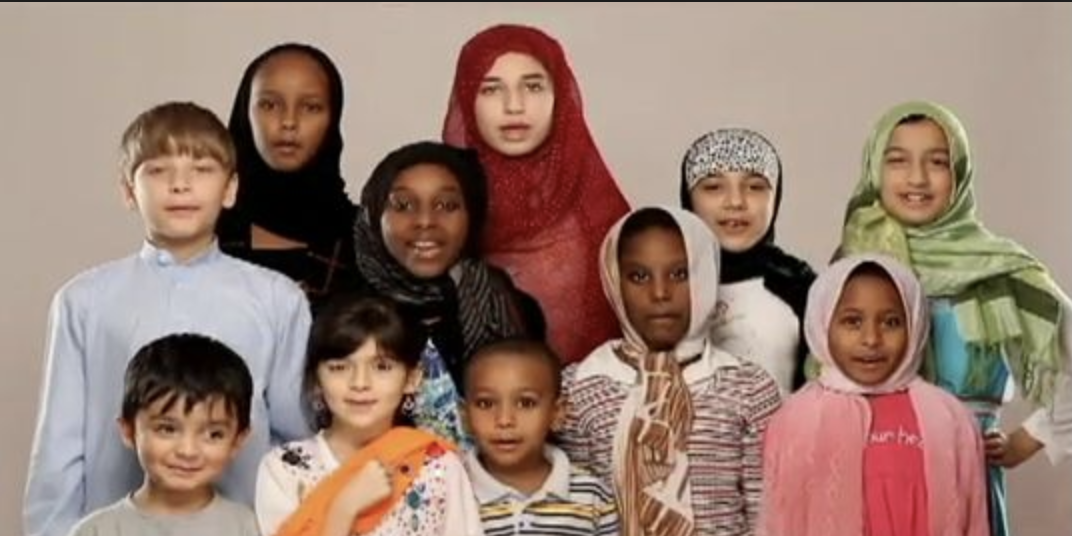
Hunter addresses the challenges that education and social rifts that members of the Muslim community in Europe face. Since education is evolving, expectations of both teachers, parents, and students are changing. With social media and other factors, students socialize while learning information academically. Their education causes them to socialize. Although children are learning in the classroom, they are not learning how to adapt to diversity that is present in many cultures. This limit in their education has serious consequences. Since students are never taught the truth about racism, it can further perpetuate it. The author discusses that violence and insecurity are increasing in Europe. A lot of this violence is directed at Muslim immigrants, which brings to light xenophobia. Xenophobia is a term that Merriam-Webster defines as a “fear and hatred of strangers or foreigners.”
By learning what is taught in basic subjects, it is limiting kids at the very least to form their own opinions and keep their mind open to other ideas. If children in Europe would be exposed to a more well-rounded approach to learning, it would create the future generation to be more prepared for the evolving world we live in and decrease the level of hatred for others who are different than yourself
In Chapter 11, Tariq Ramadan suggests that Europeans fight these injustices that are due to racism, stick with their religion teachings, and attempt to create dialogue among one another. These injustices he mentions includes fighting discrimination in employment and intervening against violence in the community. One of the challenges that Muslims will face is co-existing when they are receiving immense amounts of hate and violence directed towards them. By practicing the values of this peaceful religion, it will help individuals get through rough times. Finally, by creating a conversation about the reality of this religion, it will destroy the myths that are perpetuated in the media and throughout cultures.
Additional Sources
Hunter, Shireen T. Islam, Europe’s Second Religion: the New Social, Cultural, and Political Landscape. Praeger, 2002.
Vaisse, Justin. “Muslims in Europe: A Short Introduction,” Islam in Europe.

 Case Studies in an Inter/Multicultural World